Home Fitness for Seniors: Stay Active and Independent at Any Age
Looking for simple ways to boost your health and maintain your independence as you get older? Home fitness for seniors is one of the best tools you have. Staying active doesn’t just help you feel younger—it supports your balance, strength, and energy so you can keep doing what you love.
Why Home Workouts Matter for Seniors
As we age, moving around can get tougher. But regular exercise at home is proven to keep your body and mind sharp. You don’t need a gym membership or fancy equipment to get started. All you need is a little open space, a sturdy chair, and the motivation to take care of yourself—maybe even while your favorite TV show plays in the background.
Benefits of Senior Home Fitness
- Improves balance and coordination, reducing the risk of falls
- Increases strength and flexibility, making everyday tasks easier
- Supports heart health and boosts mood
- Helps you stay independent longer and enjoy activities like gardening, traveling, or playing with your grandkids
Easy Home Exercises for Seniors
You don’t have to follow a complicated routine to get fit at home. Try mixing up your week with:
- Gentle cardio: March in place, dance to your favorite songs, or take a walk around the block
- Strength training: Use light hand weights or even soup cans to build muscle
- Balance exercises: Practice standing on one foot or try beginner tai chi
- Stretching: Simple stretches during TV commercial breaks can help keep you limber
Personalize Your Routine
If you can, work with a trainer or physical therapist to design a workout plan tailored to you. But you can get started on your own! Choose activities you genuinely enjoy—walking with friends, following along with a chair yoga video, or stretching while watching TV.
Tips to Stay Motivated
- Start small and build up gradually
- Make exercise part of your daily routine
- Track your progress and celebrate little victories
- Invite a friend or family member to join you
The Best Home Fitness Plan Is the One You’ll Stick With
You don’t need the fanciest gear or the most challenging workout. What matters most is consistency. Moving a little every day can help you turn “I can’t” into “Yes, I did.” Start today, and discover how staying active at home can help you feel stronger, healthier, and more independent—no matter your age.
Getting Active After 60: A No-Nonsense Guide to Exercise

Let’s talk about exercise. If you’re reading this, you’re probably thinking about getting more active, and that’s fantastic! But I know what you’re wondering – how do you start without feeling like you’ve been hit by a truck the next day?
Start Like a Turtle, Win Like a Hare
Remember those people who show up at the gym in January, go all out, and disappear by February? We’re not doing that. Start with what your body can handle right now—even if that’s stretching or walking around your living room. No weights are needed, and no fancy equipment is required. Just you and your body, moving at your own pace. Once that feels easy (and only then), you can consider stepping up a notch.
Your Body’s the Boss
Here’s the thing about getting older – our bodies talk to us more than they used to, and they’ve earned the right to be heard. Do you have a knee that acts up when it rains? Or maybe you’re sharper in the morning than in the afternoon? Work with that! Pick times you feel your best, and don’t fight against your natural rhythms. And please, if something hurts (and not in that good, “I’m getting stronger” way), your body waves a red flag.
Keep an Eye on Your Ticker
It isn’t about being paranoid – it’s about being smart. While you’re exercising, check in with your heart rate occasionally. If you’ve got a fitness watch or use gym equipment with heart rate monitors, it’s perfect. But even the old-school method of checking your pulse works just fine. The goal isn’t to break any records; it’s to keep moving safely.
Know Where You Stand
The most important part is to know what you’re working with before you start any new exercise routine. If you’re taking medications or managing any health conditions, you’ll want to play it smart. Chat with your doctor first. They know your health history and can tell you precisely what to watch out for. Think of it as updating your personal owner’s manual.
The best exercise program is the one you’ll follow, which means starting where you are, not where you think you should be. Remember, you’re not training for the Olympics—you’re investing in a stronger, healthier you. And that’s worth taking your time to do right.
A Friendly Guide to Strength Training for Seniors
Let’s face it – staying strong as we age isn’t just about being able to lift heavy things. It’s about maintaining independence, keeping up with the grandkids, and making everyday tasks like carrying groceries or climbing stairs feel easier. That’s where resistance training comes in, and I promise it’s not as intimidating as it sounds.
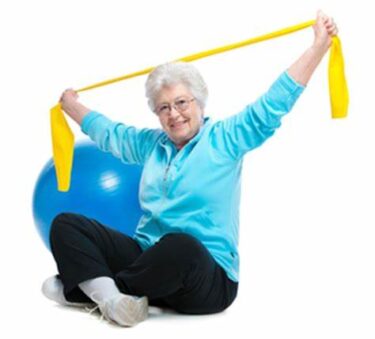
Before we dive in, remember this golden rule: start seated and work your way up to standing exercises when you’re ready. You’ll need light hand weights (2-10 pounds) or resistance bands—whatever feels comfortable. And here’s a pro tip: if you’re starting, even soup cans from your pantry will do just fine!
Here’s your simple but effective workout routine: Perform each move ten times, then move on to the next. After you finish all five exercises, take a two-minute breather (it’s the perfect time to sip some water!). Then, if you feel up to it, do it all again.
1. The Bicep Curl: Your Grocery-Lifting Muscle Builder
Think of this as training for lifting those shopping bags. Holding your weights, let your arms hang naturally by your sides with palms facing forward. Now, as if you’re showing off your muscles, curl those weights toward your chest. Hold for two seconds (count “one-Mississippi, two-Mississippi”), then lower them back down. Nice and smooth—no rushing!
2. The Leg Extension: Keep Those Knees Strong
Plant your feet firmly on the floor like sitting in your favorite chair. Now, straighten one leg before you, pointing your toes toward the ceiling. Hold that position for two seconds, feeling the muscles in your thigh working. Lower it back down and switch to the other leg. This one’s great for keeping your knees healthy and strong.
3. The Triceps Extension: Wave Goodbye to Arm Wiggle
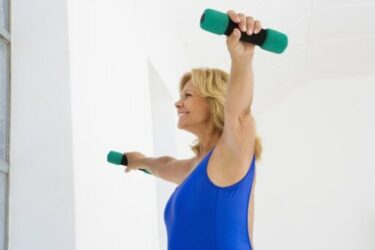
This exercise targets the back of your upper arms. Lean forward slightly in your chair (keeping your back straight!), holding your weights with your elbows tucked close to your sides. Extend your arms straight back, squeeze those triceps for two seconds, then bring them forward again. Remember to breathe – no holding your breath!
4. The Lateral Shoulder Raise: Reach Those High Shelves
Here’s one that’ll help you grab things from the top shelf. With slightly bent elbows, raise your arms out to the sides until they’re level with your shoulders (or as high as feels comfortable). Keep those palms facing the floor like you’re balancing a tray of cookies. Hold for two seconds, then lower them back down.
5. The Toe Raise: Happy Feet, Happy Balance
Last but not least! Keep those heels planted on the ground and lift your toes toward the ceiling. Hold for two seconds, then release. You can do both feet at once or alternate – dealer’s choice! This simple move is fantastic for your balance and ankle strength.
Remember: Listen to your body. If something feels wrong, take a break or check with your doctor. Start slow and stay consistent; you’ll be amazed at how much stronger you feel in just a few weeks. And hey, celebrating small wins is part of the journey, so give yourself a pat on the back for taking this step toward a stronger, more active you!
The Feel-Good Stretch Routine You Need
Let’s talk about stretching. It’s not the dull, toe-touching kind from gym class, but the kind that makes your whole body say “thank you.” This simple sequence works magic after a sweaty cardio session, or you can do it independently. Remember: warm up with a quick walk first if you’re flying solo with these stretches. Your muscles will thank you.
1. The Spinal Twist (aka “The Office Worker’s Best Friend”)
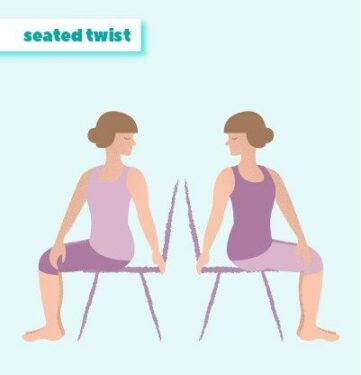
Think of this as giving your spine a gentle wake-up call. Sit tall (yes, like your grandmother always told you), then slowly turn those shoulders left as if you’re trying to peek behind you. Easy does it — we’re not going for Olympic gold here. Drift back to center, then take a peek to the right. Feels good, right?
2. The Hip Flexor Heaven
This one’s for everyone who sits at a desk all day. Drop into a kneel, and slide one foot forward like you’re about to propose (romantic, right?). If your knees aren’t fans of hard floors, throw down a blanket first. Now, ease your hips forward like you’re sinking into a hot tub. Grab a chair if you feel wobbly — no shame in playing it safe. Don’t forget to show both sides some love.
3. The Chest Opener
Find a sturdy wall or doorframe (no, the wobbly IKEA bookshelf won’t cut it). Press one arm against it, bent at 90 degrees, like you’re casually leaning at a party. Slowly turn away from your arm until you feel that sweet stretch across your chest. Hold it for 20 seconds — about the time it takes to plan dinner mentally. Switch arms and repeat.
4. The Calf Whisperer
Last but not least, let’s wake up those calves. Face a wall like you’re about to have a staring contest with it. Step one foot back, keeping those toes straight ahead — none of that pigeon-toed business. Lean forward until you feel the stretch in your calf. Hold for 20 seconds, then swap legs. Your calves might curse you now, but they’ll sing your praises later.
Remember: Stretching shouldn’t hurt if it crosses the line from “good stretch” to “ouch,” dial it back. You’re not training for Cirque du Soleil—you’re just helping your body feel better.
Stay Strong, Steady, and Flexible: A Senior’s Guide to Home Exercise
Let’s discuss staying active as we age. As the old saying goes, a body in motion stays in motion. But you don’t need fancy gym equipment or complicated routines to keep your body strong and limber. Four simple exercises can be done in your living room using only a towel and a wall.
The Shoulder Loosener
Remember those jumping rope moves from childhood? This first exercise is kind of like that, but way gentler on your joints. Grab a towel (or a stretchy band if you’ve got one), and let’s get those shoulders moving:
- Stand tall and hold your towel wide, like you’re about to dry your back
- Keeping your arms straight, sweep the towel from your belly, up over your head, and down to your lower back
- Too tight? No worries – start with a wider grip and gradually bring your hands closer as it gets easier
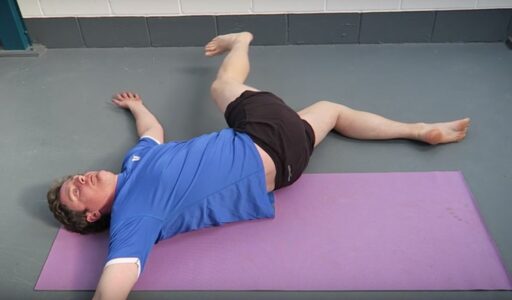
The Butterfly Legs
This one’s my favorite for keeping your core strong and your back happy:
- Lie down on your back (your bed works great for this)
- Point your legs toward the ceiling, knees bent like you’re sitting in an invisible chair.
- Stretch your arms out wide, palms down – think “snow angel” position
- Now, here’s the fun part: slowly let your knees sway side to side, like a butterfly’s wings
- Keep those shoulders glued to the bed – that’s where the magic happens!
The Golf Swing
No clubs required for this balance-booster:
- Stand next to a wall and place your hands against it for support
- Pick up one foot and let it swing side to side like you’re sweeping the floor
- Feel a bit wobbly? That’s good! Your balance is already getting better
The Wall Sit
This last one’s an honest strength builder, but don’t worry – you’re in control:
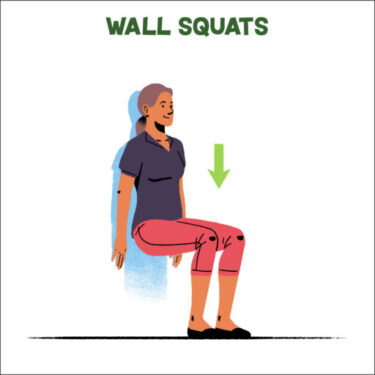
- Find a sturdy wall and lean your back against it
- Slide down like you’re easing into an invisible chair
- Only go as low as feels comfortable – even a tiny bend in the knees counts
- Try holding for 20 seconds at first
- See if you can add a few more seconds each week – you might surprise yourself!
Remember: this isn’t a race; you’re not competing with anyone. Move slowly, breathe deeply, and listen to your body. Even a few minutes of movement daily can improve your mood.
Quick safety note: If you have health concerns or balance issues, consult your doctor before trying these exercises. Also, it’s always wise to have a sturdy chair or wall nearby for support.
Why not try these moves right now? Start with one or two, and add the others when ready. Your future self will thank you!
Get Moving: Your 15-Minute Calorie-Burning Workout
Want to get your heart pumping and torch some calories while building a more muscular lower body? I’ve got you covered. This quick but effective workout focuses on your hips, core, and lower back – all those crucial muscles that keep you moving smoothly through life. It’s perfect as a standalone workout or a warm-up to something bigger.
1. Bridge: Your Glute-Strengthening Hero
Think of this as giving your hips a high-five to the sky. Lie on your back, knees bent, like you’re about to do a sit-up. Press your feet into the floor (imagine squishing bugs—but don’t really), then lift your hips toward the ceiling. Lower back down with control. Repeat 15 times, take a breather, and then do two more sets.
2. Leg Raises: Core Work in Disguise
Stay right where you are on your back. This time, you’ll lift your feet off the floor like you’re trying to kick a cloud. Keep those knees bent – we’re not trying to join the circus here. Lift, lower, and repeat 10 times. Do this three times total; yes, you’ll feel it tomorrow.
3. Clamshells: Your Hips’ Secret Weapon
Time to channel your inner mollusk! Lie on your side, knees and hips bent like you’re sitting in an invisible chair. Keep your feet stacked and lift that top knee while keeping your feet together – like a clamshell opening up to say hello. Fifteen reps, then flip to the other side. Repeat this party three times.
4. Back Extensions: Show Your Spine Some Love

Face down on the floor and rest your forehead on your hands like you’re taking a beach nap. Now lift your head and arms off the floor (keeping your forehead glued to your hands – no chicken moves here). Think “Superman Lite.” Lower back down smoothly. Do this 10 times, rest, then repeat twice more.
5. The Grand Finale: Planks
Last but not least – the move everyone loves to hate. Start face down, with your forearms on the floor and your elbows under your shoulders, as if you’re about to read a fascinating book on the floor. Now, push up onto your forearms and toes, creating a straight line from head to heels. Imagine balancing a glass of water on your back – that’s how still you want to be. Squeeze those abs like you’re bracing for a tickle attack.
Hold for 30 seconds. Yes, it feels like forever. No, the clock isn’t broken.
Pro Tips:
- Breathe! Oxygen is your friend
- If something hurts (the bad kind of hurt), back off
- Quality over speed – these moves work better when you do them right
- Feel free to take breaks between sets. It’s not a race!
Remember: Every rep brings you closer to a stronger, more flexible you. Now get moving!
A Senior’s Guide to Simple Cardio at Home
Let’s get moving! These exercises are perfect for pumping your heart in your living room. The best part? You can do them at your own pace.
Here’s a fun little circuit you can repeat 2-3 times. Between each round, take a nice 60-second breather. And here’s a pro tip: why not work on your balance during those rest periods? Try my favorite stability exercise – the stork stand. Stand on one foot for up to 30 seconds, just like our long-legged feathered friends!
Start with the March
Remember those military movies where soldiers march in perfect rhythm? That’s what we’re going for, minus the drill sergeant! March in place for a full minute, lifting your knees as high as you feel comfortable. This gentle warm-up gets your blood flowing and your muscles ready for action.
Next Up: The Friendly Jack
Think of this as the jumping jacks’ kinder, gentler cousin. Instead of jumping (who needs that anyway?), we will step side to side while raising our arms overhead. It’s the same movement that made jumping jacks a gym class favorite, but without the impact. Give yourself 20 of these at whatever speed feels right.
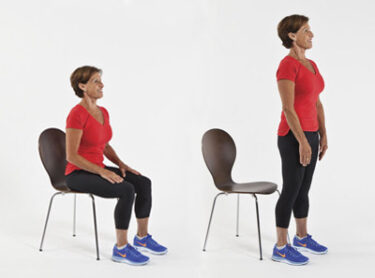
The Grand Finale: The Get-Up
This is a real-life superhero move because it builds the strength you need for everyday activities. Start by sitting comfortably on your couch or a sturdy chair. Place your feet wider than your hips, giving you a stable base. Now for the fun part: stand up, then slowly lower yourself back down. Try to do this without using your hands – it’s like a mini-victory every time you succeed! Aim for 15 repetitions.
Remember: This isn’t a race! Move at your own pace and listen to your body. Modify the movement or take a break if something doesn’t feel right. The goal is to feel energized, not exhausted.
Final Thoughts on Home Workouts for Seniors
Getting (or staying) in shape shouldn’t feel like rocket science. If you’re a senior looking to boost your fitness without leaving your living room, you’re in the right place. Let’s break down everything you need to know about effective home workouts.
Why Bother with Exercise, Anyway?
Think of your body like a car—it runs better with regular maintenance. The best part? You don’t need expensive gym equipment or complicated routines. The secret is finding activities you genuinely enjoy. Maybe that’s dancing to your favorite oldies or just strolling around your neighborhood. The key is to start small and build from there.
Before You Jump In
First things first – chat with your doctor. Yes, it’s the advice everyone gives, but there’s a good reason for it. Once you get the green light, ease into things. Try some gentle morning stretches or a short walk after lunch. Pay attention to how your body feels – it’s pretty good at telling you what it needs.
The Three Pillars of Fitness
-
Strength Training (Don’t Worry, No Bodybuilder Stuff)
Remember those soup cans in your pantry? They make perfect lightweights. Start with basic moves like lifting your arms while holding a can or standing up slowly from your favorite chair. Even 2-pound weights can make a difference when you’re just starting. -
Stretching (Your Body Will Thank You)
Stretching isn’t just about touching your toes (and who needs to do that anyway?). Focus on gentle movements that keep your spine, hips, and shoulders happy. A flexible body means you can tie your shoes and reach for things in high cabinets without cursing under your breath. -
Balance Work (Because Nobody Likes Falling)
Good balance means freedom to move confidently. Start by holding onto a sturdy chair while standing on one foot. As you get stronger, try it without holding on. Think of it as training for those moments when you need to dodge your grandkid’s toys scattered across the floor.
Playing It Safe
Safety isn’t exciting, but neither is a pulled muscle. Here’s the deal:
- Start by sitting down for new exercises – the floor isn’t getting any softer
- Focus on doing things right rather than doing them fast
- If something hurts (and not in a good way), stop
- Keep water nearby – staying hydrated is crucial
- Take breaks when you need them – this isn’t a race
Getting fit at home is doable and doesn’t require turning your living room into a gym. The goal isn’t to become a fitness influencer – it’s to keep doing the things you love, whether playing with grandkids, gardening, or dancing at your neighbor’s anniversary party.
Remember: the best exercise plan is one you’ll stick to. Start where you are, use what you have, and do what you can. Your future self will thank you.
Important Safety Note:
As with any new exercise program or equipment, it’s essential to consult your physician to ensure the equipment is safe for you to use. It is especially crucial if you have any medical or physical conditions that affect your ability to exercise properly or put your health at risk. Additionally, if you’re taking medication that affects your heart rate, blood pressure, or cholesterol level, your doctor’s advice is vital to create a workout plan that suits your needs.
Share Your Thoughts and Questions
I hope this in-depth article on Home Workouts for Seniors was helpful and informative. I encourage you to share your thoughts and questions on the topic. Have you done any of these exercises before, or have you had experience with similar ones? Your insights can help others make an informed decision. Additionally, I welcome any feedback about my website and suggestions for future content. Your input is invaluable in creating a supportive and informative community.
I look forward to hearing from you and continuing the conversation!
Disclaimer: I am not a personal trainer or a healthcare professional. The workouts I post about work best for me, but they might not be the correct type of exercise for you. I recommend consulting a doctor or health professional before changing your diet and fitness routine.
You May Also Like
Getting Fit at Home: Transform Your Body Without the Gym
This will be a plus for my dad and my mom. Great tips about getting started and honestly, I never knew all of these exercises would be excellent for seniors. This post is also at the right time, especially the fact that it is during the lockdown. Thanks so much for sharing
This article is helpful for most seniors and people who have limited mobility or range of motion. When your body is not getting any exercise, you will lose strength and muscle mass. The whole point of the exercise is to keep moving. This is why I like this quote, “If you don’t use it, you’ll lose it.” This is so true. If you go to a nursing home, one of their leading practices for people who are bed-bound is to help them move their limbs with some sort of exercise as much as possible. Exercise helps your ligaments and muscles be flexible and strong. Another critically important part of exercising is having resistance exercises for seniors, including everyone. This can help boost brain size and help them improve their cognitive thinking. You did great in this article.
Hello John,
Thanks for sharing your thoughts.
All the best!