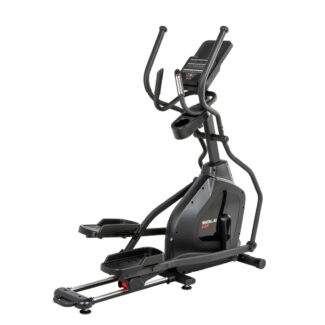
 Buying an elliptical shouldn’t be confusing or overwhelming. You want a machine that runs smoothly, offers enough resistance for a good workout, and doesn’t make you pay for features you won’t use. The Sole E20 Elliptical keeps things simple.
The E20 is an entry-level, front-drive elliptical with an 18-inch stride, quiet magnetic resistance, and an easy-to-read LED display. It comes with built-in workout programs, pulse-grip heart-rate sensors, and multiple resistance levels, so you can adjust the intensity as you get fitter.
What Is the Sole E20 Elliptical?
The Sole E20 is a home elliptical trainer built for low-impact cardio exercise. Its moving handlebars let you train your upper and lower body together, while the stationary grips give you another option when you want to focus on your legs or check your heart rate.
The 18-inch stride should accommodate most users comfortably, although taller people or those who prefer a longer, more open motion may want to compare it with a 20-inch model. Its front-drive layout also produces a slightly different feel from the flatter motion found on some center- and rear-drive machines.
Who Should Consider the Sole E20?
The Sole E20 makes the most sense for beginners, casual exercisers, and budget-conscious shoppers who want a dependable home cardio machine without a large touchscreen or an app-centered experience. It gives you the essentials for steady-state sessions, interval workouts, and everyday movement.
This isn’t the smallest piece of fitness equipment, though. You’ll need to measure your room carefully and leave enough open space to get on, exercise, and step off safely. If you have room, the E20 offers a practical middle ground between a basic compact trainer and a more expensive premium elliptical.
Is the Sole E20 Worth Buying?
It really depends on what you want from your home workouts. If you like quiet resistance, a simple console, and a comfortable, low-impact exercise option, the Sole E20 is worth considering. But if you want streaming classes, a big interactive screen, or a longer stride, you might prefer a different model.
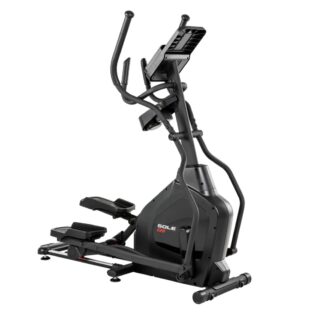
In this review, I’ll cover the Sole E20’s design, workout features, comfort, size, and any possible downsides to help you decide whether it’s right for your home gym.
Keep reading for my full review below!
Product: Sole E20 Elliptical
Price: For a great deal on this elliptical, visit SoleFitness.com
Warranty: Frame Lifetime / Parts and Electronics 1 year / Labor 1 year / Cosmetic 90 days
My rating: 9.25/10
Affiliate Disclosure: As a Sole Fitness Affiliate Program participant, I earn commissions on purchases made through links in the post. Full disclosure
Details and Specifications
- Frame: Alloy Steel + ABS Plastic + Electronics
- Dimensions: 59 L x 22 W x 64 H inches
- Product Net Weight: 124 lbs
- Maximum User Weight: 300 lbs
- Resistance Type: Magnetic Eddy Current
- Resistance Levels: 20
- Flywheel Weight: 14.3 lbs
- Incline System: 3 Manual Settings
- Stride Length: 18 inches
- White LED Fitness Monitor: Tracks Time, Distance, Speed, RPM, Calories, Watts, Resistance Level, and Heart Rate
- Heart Rate Monitoring: Hand Pulse Sensors and Bluetooth Chest Strap or Armband Transmitter (sold separately)
- Workout Programs: 8 Built-in and 2 User-Defined
- Bluetooth Connectivity: Connect with the Sole+, Studio, and Kinomap Fitness apps
- Warranty: Frame Lifetime / Parts and Electronics 1 year / Labor 1 year / Cosmetic 90 days
Sole E20 Elliptical Frame: Strong, Stable, and Built for Home Workouts
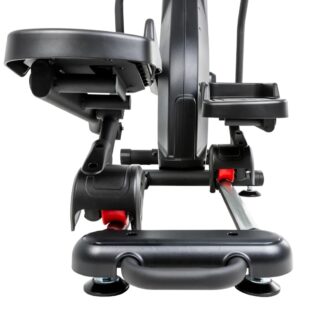
Features may get most of the attention, but the frame determines how sturdy an elliptical feels. The Sole E20 uses heavy-duty steel, a wide base, and a secure pedal system to stay stable during workouts. It isn’t especially portable. Still, that extra weight helps keep the machine planted when you increase your pace or resistance.
A Solid Steel Foundation
The Sole E20 weighs about 125 pounds and supports users up to 300 pounds. Its substantial build reduces unwanted movement as you pedal and use the handlebars. That matters because an elliptical handles force from several directions at once. The pedals move in opposite directions while the handlebars pull and push higher on the machine. A strong central frame helps prevent rocking and flexing, especially during faster or harder workouts.
Secure Pedal Connections Create a Smoother Stride
The E20 combines its steel frame with a secure pedal-arm linkage. This helps the pedals follow a controlled path and makes the machine feel more connected underfoot. Independent testing also found the E20 quiet while pedaling, another sign of its solid construction.
A 300-Pound Weight Capacity
With a 300-pound user capacity, the Sole E20 can work well in many households. It’s still smart to leave some space between your body weight and the machine’s maximum limit. Faster strides generate greater force, placing additional stress on the frame, joints, and fasteners. Staying comfortably below the limit can help reduce wear.
Lifetime Frame Warranty
Sole backs the E20’s frame with a lifetime warranty. Coverage can vary by location, retailer, and model year, so confirm the exact terms before buying. A warranty isn’t a substitute for proper assembly and regular maintenance. Even so, lifetime coverage provides added confidence in the machine’s core structure.
Stable, but Not Easy to Move
At roughly 125 pounds, the Sole E20 can be difficult to relocate. Pick its location before assembly, and ask another adult to help move it into position. Measure your floor space and ceiling clearance first to make sure it fits comfortably.
Once assembled, place the elliptical on a firm, level surface. If it rocks, adjust the leveling feet. It’s also worth checking and tightening the main bolts after your first few workouts. A dense equipment mat can protect the floor and provide a more consistent base.
Is the Sole E20 Frame Well Built?
Yes. The Sole E20’s heavy-duty steel frame, 300-pound capacity, and secure pedal-arm linkage provide a sturdy foundation for home cardio workouts. Its lifetime frame warranty offers extra reassurance.
The E20 suits people who value stability more than portability. Assembly takes some effort, and the machine isn’t easy to move. Once it’s in place, though, it should feel steady, quiet, and dependable during regular low-impact workouts.
Sole E20 Elliptical Pedals and Handlebars: Comfort and Control
The Sole E20 combines roomy pedals with moving and stationary handlebars. These features help you stay comfortable and in control, whether you’re doing full-body cardio, focusing on your legs, or checking your heart rate.
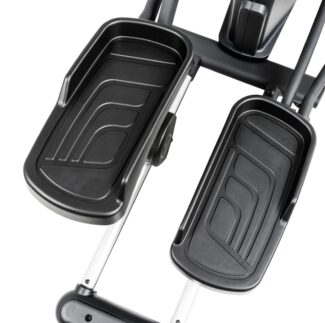
Oversized Pedals Give Your Feet More Room
The Sole E20 has 15-inch pedals that fit most users and standard athletic shoes. The wide surface gives you enough room to find a comfortable position and make small adjustments during longer workouts. Additionally, they have a slight two-degree inward slope designed to support natural alignment through your feet, knees, and hips.
An 18-Inch Stride Keeps the Motion Compact.
The pedals follow a traditional forward-and-back elliptical path with an 18-inch stride. This stride length should feel comfortable for many people, especially shorter and average-height users. If you’re tall or have a long natural gait, you may prefer an elliptical with a 20-inch stride.
Moving Handlebars Add Upper-Body Work
The moving handlebars bring your arms, shoulders, chest, and back into each workout. Pushing and pulling them with purpose can increase intensity without adding time to your session. Don’t lean on the handles or let the machine move your arms for you. If you have to rock your body to keep going, lower the resistance and focus on smooth, controlled movement.
Stationary Handlebars Improve Stability
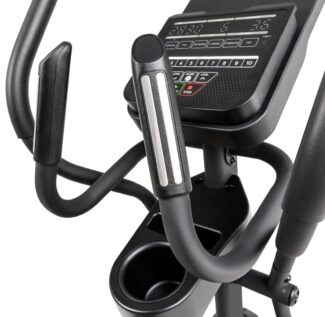
Fixed handlebars near the console provide an additional grip option. Use them when you need extra balance, want to focus on your lower body, or need to adjust the controls. These bars also have pulse sensors for quick heart-rate estimates. Place both hands on the sensors and hold them still until you get a reading. For better form, keep your grip light and avoid leaning heavily on the bars.
How to Stay Comfortable During Workouts
Place each foot near the center of the pedal, with the entire foot supported. Your knees should move in the same direction as your feet, rather than collapsing inward or drifting outward. Supportive athletic shoes with secure laces can also help you feel more stable.
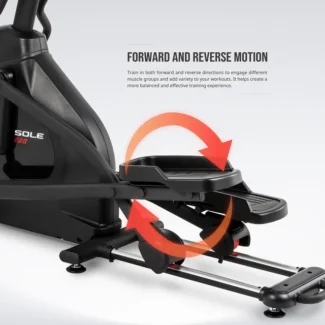
Use the moving handlebars for full-body cardio and the fixed grips when you need balance or want to check your heart rate. You can also switch between forward and reverse pedaling. Just slow down before changing direction.
Are the Sole E20 Pedals and Handlebars Comfortable?
For an entry-level home elliptical, the Sole E20 gets the essentials right. Its oversized pedals offer plenty of foot room, and their slight inward angle encourages a natural stance. The moving handlebars add upper-body engagement, while the stationary grips provide stability and basic heart rate feedback.
The fixed pedals and 18-inch stride won’t suit everyone. Taller users and anyone who wants more adjustability may prefer a different machine. For most home exercisers, though, the Sole E20 offers a practical mix of comfort, control, and simplicity.
Sole E20 Resistance and Incline: Quiet, Smooth, and Easy to Adjust
The Sole E20 pairs quiet magnetic resistance with three manual incline settings. This gives you two ways to change your workout: adjust the resistance to make pedaling harder, or change the incline to target your lower-body muscles differently.
What Type of Resistance Does the Sole E20 Use?
The Sole E20 uses eddy current brake (ECB) magnetic resistance. Instead of pressing a brake pad against the flywheel, it uses magnets to control how easy or difficult each stride feels. Because there’s very little friction, the machine runs quietly and experiences less wear over time. That makes it a good choice for shared homes, apartments, and early-morning or late-night workouts.
How Many Resistance Levels Does It Have?
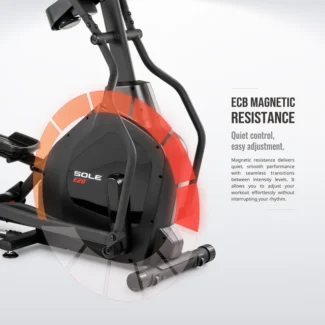
The E20 has 20 resistance levels, giving you plenty of room to adjust the difficulty. Lower levels help you warm up, recover, or get comfortable with the machine. Middle settings work well for steady cardio, while higher levels can make intervals and challenging workouts more demanding.
You can change the resistance from the console while exercising. Adjustments happen gradually, so you won’t have to break your rhythm when moving between levels.
How Do the Three Manual Incline Settings Work?
The Sole E20 also has three manual incline positions, so you can’t adjust it from the console. Changing the incline alters your stride angle, shifting the emphasis to different lower-body muscles and making your workouts feel less repetitive.
You’ll need to step off the machine, wait for it to stop completely, and then change the setting. Think of incline as something you choose before your workout. During the session, use the electronic resistance controls for quick adjustments and intervals.
What Does the Flywheel Do?
The E20 uses a 14.3-pound flywheel to help keep each stride smooth and consistent. While resistance controls how hard you work, the flywheel helps maintain momentum as you pedal. For everyday cardio, moderate workouts, and general fitness, it offers a practical balance of smooth movement and manageable resistance.
Is the Sole E20 Good for Beginners?
Yes. Beginners can start with low resistance and the lowest incline, then slowly increase the difficulty as their fitness improves. Choose settings that challenge you without throwing off your form. If you start rocking from side to side, leaning heavily on the handlebars, or struggling to finish each stride, reduce the resistance or incline.
Is the Sole E20’s Resistance and Incline System Any Good?
For most home users, yes. The Sole E20 offers quiet magnetic resistance, 20 difficulty levels, and 3 incline positions. You can change resistance during a workout, while the incline lets you adjust the overall movement and muscle focus before you begin.
The 14.3-pound flywheel may feel light to experienced athletes who train at high intensities. But for beginners, casual exercisers, and families seeking versatile, low-impact cardio, the E20 provides a useful mix of comfort, simplicity, and control.
Practical LED Fitness Monitor for Clear, Connected Workout Tracking
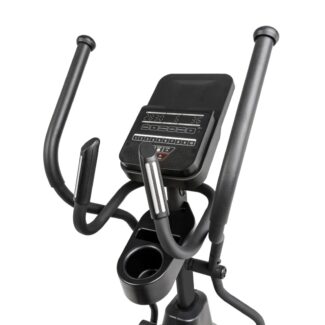
A smooth stride is important, but you also need to know how you’re doing. The Sole E20 Elliptical’s LED fitness monitor keeps essential workout data easy to see, with simple controls and Bluetooth connectivity.
A Bright, Easy-to-Read Display
The Sole E20 features a bright LED display with a clean, straightforward layout. You can check your progress at a glance without leaning toward the console or clicking through confusing menus. This practical design works well for beginners, shared households, and anyone who prefers physical controls over a large touchscreen.
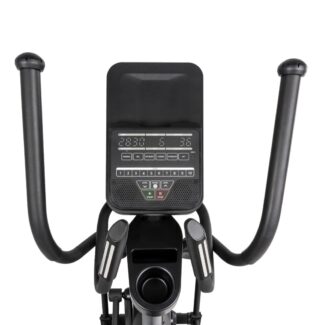
What Does the Sole E20 Monitor Track?
Depending on the model, the Sole E20 tracks:
- Time
- Distance
- Estimated calories burned
- Heart rate
- RPM
- Watts
These readings can help you adjust your workout as you go. If your RPM drops, you can increase your cadence. If your heart rate climbs too high, you can lower the resistance. Time and distance also make it easy to track consistency from one workout to the next.
Keep in mind that calorie and heart rate figures are estimates. They’re useful for comparing workouts, but you shouldn’t treat them as exact measurements.
Manage Your Intensity With RPM and Heart Rate
RPM shows how quickly you’re pedaling. Monitoring it can help you maintain a steady pace or structure interval workouts. For example, you might keep a comfortable cadence during recovery periods, then increase it for short bursts of harder effort.
The E20’s pulse grips send heart rate data to the console. For the best reading, hold both sensors with steady contact and avoid squeezing too tightly. These sensors provide convenient feedback, though movement, moisture, and hand position can affect their accuracy.
Add Structure With Built-In Programs
The Sole E20 includes built-in programs that make it easier to plan your workouts. A visual profile shows your position during the session and helps you prepare for changes in intensity. You can also adjust resistance from the console without stepping off the elliptical.
Workout options include:
- 1 manual mode
- 5 preset profiles: Hill, Fat Burn, Cardio, Strength, and HIIT
- 2 heart rate programs
Connect Through Bluetooth
The 2026 Sole E20 features Bluetooth connectivity. You can pair a compatible Apple or Android device with supported Sole services and transfer workout information for easier tracking beyond the LED display. Also, Bluetooth audio lets you play music, podcasts, or other audio through the elliptical’s built-in sound system—no cable required.
Why the Simple Console Works
The Sole E20 gives you information you can actually use. It displays your pace, effort, and progress without turning every workout into another screen session. Bluetooth adds convenience, while the physical controls keep operation quick and familiar.
If you want streaming classes or a large touchscreen, a more expensive elliptical may suit you better. If you prefer clear workout data, built-in programs, and straightforward wireless features, the Sole E20 makes a lot of sense. It gives you the essentials, then gets out of the way so you can focus on exercising.
SOLE+ vs. STUDIO vs. Kinomap: Which Fitness App Fits Your Workout Style?
Indoor cardio gets boring fast. A connected fitness app can help by providing a coach to follow, stats to track, or real-world routes to explore on your treadmill, exercise bike, elliptical, or rowing machine.
SOLE+, STUDIO, and Kinomap each approach home workouts differently. SOLE+ pairs guided content and workout tracking with compatible SOLE equipment. STUDIO brings the energy of an instructor-led class into your home. Kinomap lets you train along scenic routes recorded worldwide.
Here’s how they compare, what they cost, and which app suits whom best.
SOLE+: Built for SOLE Fitness Equipment
SOLE+ is the companion app for compatible SOLE treadmills, exercise bikes, and ellipticals. It brings workout records and digital training content together in one place.
The app is a good choice if you want more structure without paying for an expensive monthly membership. It offers thousands of workouts led by professional instructors, including walking, running, cycling, and off-machine sessions. That variety makes it easier to keep exercising without repeating the same routine every day.
SOLE+ also simplifies progress tracking. Connect a compatible machine to your account, and the app can record your sessions. Over time, you’ll get a clearer view of how often you exercise and how your performance is changing.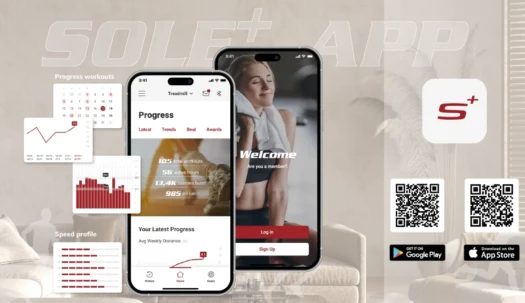
How Much Does SOLE+ Cost?
SOLE promotes SOLE+ as free with a SOLE machine, making it one of the more affordable connected fitness options for eligible equipment owners. Access and pricing may vary by country. Check the terms in your region before signing up.
Who Is SOLE+ Best For?
SOLE+ makes the most sense for SOLE equipment owners who want guided workouts and activity tracking in one app. It’s especially appealing if you don’t want to pay a large recurring fee to use the digital features connected to your machine.
It may be less useful if you own equipment from another brand or want immersive route simulations. In that case, a broader platform such as Kinomap could be a better fit.
STUDIO: Boutique-Style Classes at Home
STUDIO is made for people who push harder when an instructor guides every interval. It combines coaching, music, and performance data to recreate the feel of a boutique fitness class at home. Its library includes more than 3,000 instructor-led, data-driven classes across 11 workout types. You can move between cardio and strength sessions instead of doing the same workout day after day.
STUDIO first became known for treadmill classes paired with carefully chosen playlists. Its catalog now covers several types of training, making it useful for anyone who wants energetic coaching and plenty of variety. You can choose a class by length, difficulty, instructor, or workout style, then start whenever you’re ready.
The format is especially helpful if you struggle to plan workouts on your own. Your instructor tells you when to speed up, recover, or move to the next interval. All you have to do is press play and follow along.
How Much Does STUDIO Cost?
STUDIO is free to download, but you’ll need a paid membership for full access to its classes. Its partnership with SOLE includes a 30-day free trial for new and existing SOLE customers.
After the trial, the listed subscription price was $19.99 per month or $199.99 per year. Prices and trial offers can change, so check the app before subscribing.
Who Is STUDIO Best For?
STUDIO suits people who enjoy the coaching, music, and shared energy of group fitness but would rather exercise at home. It’s also a useful option for runners who want structured treadmill sessions instead of another unplanned jog.
The membership offers the most value if you take classes regularly. If you already know how you want to train, you may not need the extra guidance. And if you’d rather explore scenic routes than follow an instructor, Kinomap will probably be more appealing.
Kinomap: Turn Indoor Cardio Into Outdoor Exploration
Kinomap offers something different from a standard follow-along class. It uses videos of real routes to create interactive workouts for cycling, running, walking, and rowing.
Download the app to a compatible smartphone or tablet, connect it to your fitness equipment, and choose a route. Depending on your machine, Kinomap can use live workout data as you move through the course.
The result feels more engaging than simply watching a travel video. You might still be exercising in your living room, but your screen can take you along roads and trails recorded around the globe. If ordinary indoor cardio feels repetitive, that change of scenery can make a real difference.
Kinomap supports many exercise bikes, home trainers, treadmills, ellipticals, and rowing machines. Compatibility depends on the model and operating system, so check the app’s equipment list before subscribing.
You’ll also find coaching videos for days when you want more direction. This mix of scenic routes and guided workouts gives Kinomap broader appeal than an app focused only on classes or workout records.
How Much Does Kinomap Cost?
Kinomap offers a 14-day free trial, giving you time to test the connection with your equipment and explore its workout library.
Current U.S. subscription options include:
- Monthly: $11.99 per month
- Annual: $89.99 per year
- Five-year plan: $359
A family option may also be available for an extra monthly fee. Kinomap stopped selling its former lifetime plan on January 1, 2026.
Who Is Kinomap Best For?
Kinomap is a strong choice for cyclists, runners, walkers, and rowers who want indoor training to feel more like an outdoor adventure. It can also work well for households with several types or brands of cardio equipment, as long as the machines are compatible.
Setup takes a little more effort than playing a basic workout video because you’ll need to connect your equipment for the full interactive experience. Once it’s working, though, the real-route format can make long cardio sessions feel much shorter.
Which Fitness App Should You Choose?
Choose SOLE+ if you own compatible SOLE equipment and want a simple way to track workouts, follow classes, and keep membership costs down.
Choose STUDIO if energetic instructors, music, and structured classes help you stay motivated. Of the three apps, it comes closest to putting a boutique fitness coach in the room with you.
Choose Kinomap if scenic routes motivate you more than a traditional studio class. Its support for several types of cardio equipment also makes it a flexible choice for multi-machine households.
Before paying for any app, check its equipment compatibility, device requirements, regional availability, and current price. If there’s a free trial, use it. A feature list can tell you what an app does, but a trial will tell you whether you’ll actually enjoy using it.
The best app isn’t necessarily the one with the most workouts or features. It’s the one that makes you want to exercise again tomorrow.
How to Assemble and Maintain the Sole E20 Elliptical
Assembling an elliptical can feel overwhelming when every part is spread across the floor. The good news? The Sole E20 is much easier to put together when you organize the hardware, follow the correct order, and take your time. This guide covers assembly, routine maintenance, and fixes for common noises and performance problems.
Once it’s assembled, the E20 doesn’t need much upkeep. A little cleaning and the occasional inspection can keep it running smoothly and quietly for years.
Before You Start
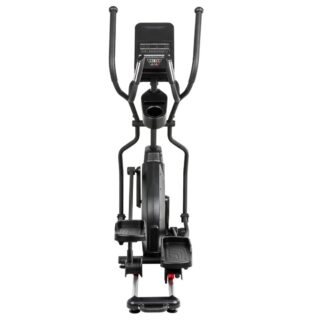
Choose a level indoor surface with enough space to safely mount, use, and clean the elliptical. If you’re placing it on carpet, consider using a dense equipment mat. It’ll protect the floor, improve stability, and make cleaning easier.
Keep the area dry and make sure you can reach the power connection without running the cord near moving parts.
Before opening the box, gather:
- The tools and hardware included with the elliptical
- A clean cloth
- Scissors or a box cutter
- A container for loose fasteners
- The owner’s manual for your specific E20 model
- A second adult to help with lifting and alignment
Open the carton carefully. Avoid cutting too deeply, since you could scratch the frame or damage a cable. Remove the tools and hardware first, then keep each hardware group separated by assembly step. Similar-looking bolts and washers are easy to mix up.
Inspect every part as you unpack it. Watch for cracked covers, pinched wires, bent brackets, missing fasteners, or other shipping damage. Don’t try to straighten a structural part or replace a missing bolt with something from your garage. Contact the retailer or Sole if anything is damaged or incomplete.
Sole E20 Assembly: Step by Step
The instructions below explain the general assembly process. Always treat your specific model’s manual as the final authority on bolt sizes, washer placement, cable routing, torque, and part orientation.
Step 1: Position and Stabilize the Main Frame
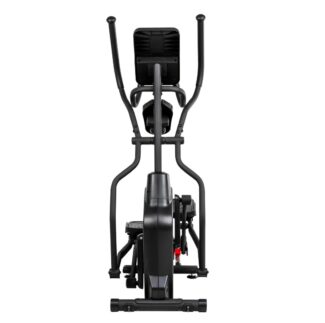
Place the main frame where you plan to use the elliptical and remove all shipping materials. Attach the stabilizer components listed in the manual, ensuring the front and rear pieces face the correct directions.
Start every fastener by hand. Don’t fully tighten the first bolt while the others are still loose. Doing so can pull the frame out of alignment.
Once all bolts are threaded correctly and the washers match the manual’s diagrams, tighten the hardware evenly.
Step 2: Install the Console Mast
Slide the mast cover onto the console mast before attaching the mast to the frame. This step is easy to miss—and annoying to fix once the mast is installed.
Find the wiring harness inside the frame and connect it to the cable running through the mast. Have your helper support the mast while you work.
Align the connectors carefully and press them together without twisting or forcing them. Move any extra wire into the frame opening before lowering the mast into place. Watch the cable closely to keep it from getting trapped.
A pinched console wire can cause several problems, including:
- A blank display
- Intermittent readings
- Unresponsive controls
- Resistance problems
Install the specified bolts and washers, starting each bolt by hand. Tighten them gradually in an alternating pattern, then move the mast cover into its finished position.
Step 3: Attach the Console
Ask your helper to hold the console near the mounting plate while you connect the cables. Match each plug by its shape and orientation. Hold the connectors, not the wires, when connecting.
Tuck the extra cable into the mast without trapping it between the console and mounting plate. Place the console on its mount, start each screw by hand, and tighten them evenly.
Use moderate pressure. The console housing is plastic, and overtightening can crack its mounting points.
Before continuing, make sure the console sits straight, and no wires are caught around its edges.
Step 4: Install the Swing Arms and Handlebars
Identify the left and right swing arms before installing them. They may look nearly identical, so check their labels against the diagrams in the manual.
Fit each arm onto its shaft using the specified washers, spacers, and fasteners in the correct order. Missing or reversed hardware can cause rubbing, clicking, sideways movement, and early wear.
Attach the lower connecting arms as directed. Support each arm while inserting the fasteners so its weight doesn’t pull the joint out of alignment.
Install the fixed handlebars and covers only after confirming that both swing arms move freely.
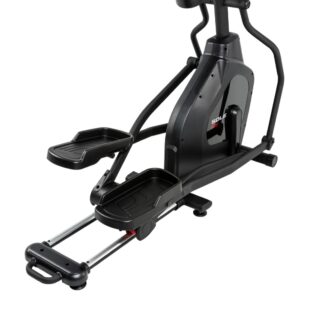
Step 5: Connect the Pedal Arms and Linkages
Connect the pedal arms to the crank, rollers, or linkage points shown in the manual. Complete one side at a time and keep the bolts, washers, bushings, and spacers in the correct order.
You may need to move a joint slightly to align the holes. Do this gently. Never strike the arm or force a bolt through at an angle.
Start each fastener by hand and make sure it turns smoothly before tightening it. Repeat the process on the other side.
Once both sides are connected, move the pedals through several slow revolutions by hand. The motion should feel smooth and consistent, without binding or obvious side-to-side contact.
Step 6: Add the Protective Covers
Install the handlebar, joint, wheel, and linkage covers in the order shown in the manual. These covers protect moving connections and give the elliptical a clean, finished appearance.
Plastic covers only need light tightening. If one doesn’t sit flush, check its position before tightening the screw. Forcing a misaligned cover into place can crack it or create an annoying rubbing noise.
Step 7: Check Every Fastener
Go back through the entire machine and confirm that all hardware is secure. Pay particular attention to:
- The console mast
- Swing-arm pivots
- Handlebars
- Pedal connections
- Linkages
- Front and rear stabilizers
Don’t assume an early bolt is still tight. Installing other parts may shift the joint or reveal that a fastener wasn’t fully seated.
Finally, remove all tools, packaging, and loose hardware from the area. Check beneath the pedals, rollers, and rails before moving the machine.
How to Maintain the Sole E20
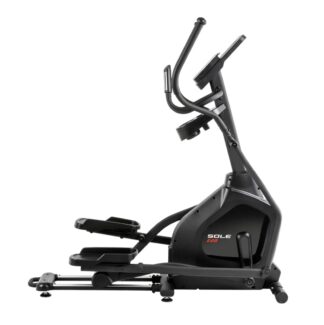
Maintaining the E20 is pretty simple: wipe away sweat, control dust, inspect the hardware, and lubricate only where the manual specifies.
You don’t need to spend an entire weekend servicing the machine. A few quick checks throughout the year should cover most of its needs.
After Every Workout
Wipe down the console, grips, handlebars, pedals, and frame. Sweat can damage finishes and work its way into joints or electronics if it’s left to dry.
Check the floor for water and make sure the power cord remains clear of moving parts.
Every Week
Clean the rails and inspect the rollers’ path. Remove dust, pet hair, and debris from around the base.
During your next workout, listen for any new squeaks, clicks, or rubbing sounds. Catching a noise early can keep a minor issue from becoming a repair.
Every Month
Vacuum under and around the elliptical. Check accessible fasteners, inspect the power cord, test the levelers, and look for unusual wear on the rollers or moving joints.
If a bolt repeatedly comes loose, don’t keep tightening it and ignoring the cause. The fastener, threads, or connected part may need professional attention.
Every Three to Six Months
Inspect the main connections more closely. If the manual calls for lubrication, first clean the approved area, then apply a thin coat of the recommended product, and wipe away any excess.
More lubricant isn’t better. Too much can collect dust, drip onto the floor, or reach parts that should stay dry.
Once a Year
Give the E20 a thorough external inspection. Check the frame, pedals, arms, rollers, covers, cables, hardware, and power components.
Arrange professional service if you find:
- Structural damage
- Hardware that repeatedly loosens
- Persistent internal noise
- Unstable joints
- Erratic resistance
- Damaged electrical components
Troubleshooting Common Sole E20 Noises
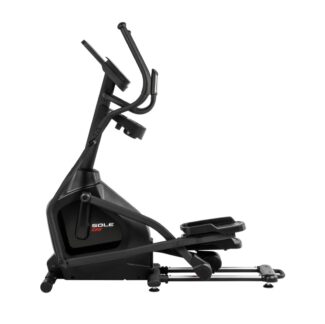
Most elliptical noises come from dirty rails, an uneven floor, a loose connection, or a dry moving point. Pay attention to when the sound occurs. Its timing can help you find the source.
Squeaking
Start by cleaning the rails and rollers. Then inspect the pedal joints, swing-arm pivots, handlebars, and mast hardware.
Clicking Once per Revolution
Inspect the pedal arms, rollers, covers, crank connections, and linkage fasteners on both sides. Look for a cover touching an arm once per revolution.
Knocking or Clunking
Stop using the elliptical and inspect its major fasteners. Check the swing arms, pedal connections, linkages, console mast, and stabilizers for movement.
Grinding or Scraping
Grinding needs immediate attention.
Check for:
- A cover rubbing against a moving part
- Damaged rollers
- Dirt or debris on the tracks
- A misaligned linkage
- Visible metal-on-metal contact
If the noise appears to come from inside the drive housing, don’t remove the enclosure unless you have the correct service documentation and repair experience. Internal components may be tensioned, electrical, or covered by the warranty.
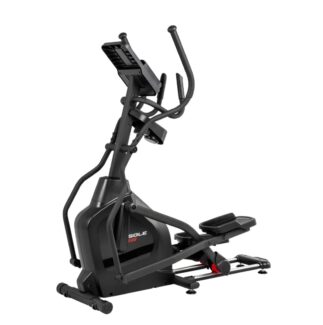
Wobbling
Check the floor first, then adjust the levelers. If the machine still moves, inspect the stabilizer and mast hardware.
Blank or Unresponsive Console
Make sure the power adapter is securely connected and test the outlet with another device. Inspect the cord for visible damage. If the display remains unresponsive, contact Sole instead of opening the electrical system.
Resistance Doesn’t Change
Restart the machine and test several resistance levels while pedaling slowly. Check the console for error messages and make sure its cable connections are secure.
Keep It Simple
The hardest part of assembling the Sole E20 isn’t tightening the bolts. It’s staying patient.
Sort the hardware, follow the manual, support heavy components, and make sure no cables get pinched. Once everything is connected, level the frame and complete a slow test before your first full workout.
From there, upkeep is straightforward. Wipe away sweat, clean the rails and rollers, vacuum around the base, and inspect the hardware from time to time. Lubricate only when—and where—the manual recommends it.
If you hear grinding, feel an unstable joint, notice an electrical fault, or suspect an internal problem, stop using the machine and arrange service. A few minutes of routine care can help the E20 stay smooth, quiet, and reliable without turning every squeak into a mystery.
Sole E20 Elliptical Pros and Cons
The Sole E20 elliptical combines a sturdy build with straightforward workout features at a relatively approachable price. It’s a practical choice for home users who prioritize smooth, dependable cardio over flashy entertainment. Still, its compact stride and basic console won’t suit everyone.
Pros
- Delivers smooth, quiet resistance: The 14.3-pound flywheel and ECB magnetic resistance provide a fluid ride with minimal noise.
- Offers 20 resistance levels: Adjust the intensity for gentle recovery sessions, steady cardio, interval training, or more demanding workouts.
- Supports low-impact exercise: The elliptical motion minimizes repetitive impact, making the E20 a joint-friendly alternative to running.
- Provides a full-body workout: The moving handlebars engage your upper body while the pedals train your legs.
- Accommodates many home users: Its 300-pound weight capacity makes this entry-level Sole elliptical suitable for a broad range of exercisers.
- Offers a comfortable 18-inch stride: The stride length should provide a natural motion for many shorter and average-height users.
- Includes built-in workout programs: Preset options add structure and variety without requiring a fitness subscription.
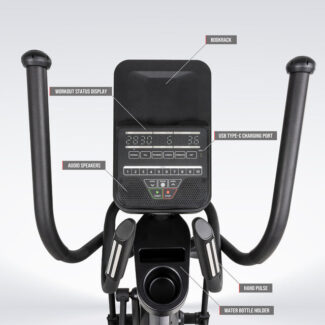
- Displays essential workout data: The white LED console lets you monitor key training information without navigating complicated menus.
- Includes Bluetooth speakers: You can listen to music, podcasts, or audiobooks through the built-in audio system.
- Provides USB-C charging: The charging port helps keep a compatible phone or tablet powered during longer sessions.
- Avoids mandatory membership fees: You can use the machine’s main workout functions without paying for an ongoing app subscription.
- Offers good entry-level value: The E20 combines magnetic resistance, multiple intensity settings, built-in programs, and useful connectivity at a lower price than Sole’s premium ellipticals.
Cons
- Includes a basic display: The LED console covers essential tracking, but users who want a large touchscreen may find it underwhelming.
- May feel heavy to move: Its substantial construction improves stability but makes rearranging or relocating the elliptical more difficult.
- Has a lighter flywheel than pricier models: The 14.3-pound flywheel works well for general home cardio, but experienced athletes may prefer the feel of a heavier flywheel.
- May not challenge serious athletes enough: Highly conditioned users may want a heavier flywheel, longer stride, and more advanced training options.
The Sole E20 elliptical is perfect if you want a quiet, sturdy, uncomplicated elliptical for regular low-impact cardio at home. Consider a different model if you’re tall, want a 20-inch stride, need premium training technology, or expect commercial-style performance.
Sole E20 Elliptical Review: Quiet, Affordable, and Made for Home Workouts
The Sole E20 gives you the solid feel and smooth motion Sole is known for without the price tag of its premium machines. It’s a front-drive elliptical built for low-impact cardio at home, and it handles the basics well.
You get an 18-inch stride, 20 resistance levels, three manual incline positions, and a 300-pound weight capacity. There’s no giant touchscreen or long list of flashy features. For many people, that’s part of the appeal. You can step on, start moving, and get a good workout without paying for extras you may never use.
Smooth, Comfortable Movement
Sole angles the pedals inward by two degrees to encourage more natural lower-body alignment. This may help reduce stress on your ankles and knees compared with basic ellipticals that use flat, fixed pedals. No machine can promise a pain-free workout, but it’s a thoughtful design choice.
The 18-inch stride should feel comfortable for many adults, particularly those of average or shorter height. Taller users—or anyone used to the longer stride of a commercial elliptical—may be happier with a 20-inch model.
Plenty of Resistance, Plus Manual Incline
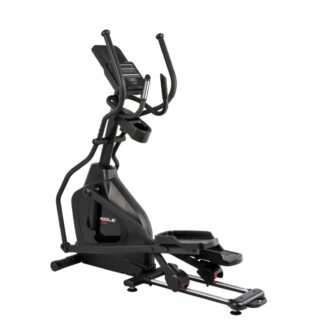
With 20 resistance levels, the E20 works for both beginners and more experienced exercisers. The lower settings are useful for warmup, recovery sessions, and easy cardio. Turn up the resistance to create tougher intervals or more demanding steady-state workouts.
The E20 also has three manually adjustable incline positions. Changing the ramp angle alters the movement and shifts effort to different lower-body muscles. The catch is that the incline doesn’t adjust electronically. You’ll need to pause your workout and reposition the ramp by hand.
That’s less convenient than power incline, especially if you like changing the angle during interval workouts. Still, it gives you more training variety than a fixed ramp while keeping the machine simple and affordable.
A Simple Console With Useful Extras
The E20 uses a straightforward LED console that clearly displays your workout data. You won’t have to dig through menus just to select a program or change the resistance. Bluetooth speakers let you play music, podcasts, or other audio through the machine. There’s also a USB-C charging port and a tablet holder for watching shows or following workouts on your own device.
This simple setup has a big advantage: you’re not tied to a built-in screen, a single fitness platform, or a monthly subscription. If you want trainer-led classes, advanced app features, or a large touchscreen, though, the E20 may feel a little basic.
Sturdy Enough for Regular Home Workouts
The Sole E20 supports users up to 300 pounds and comes with a lifetime frame warranty. Its substantial frame feels steadier than many lightweight ellipticals in the same price range. That sturdiness makes it heavy. The machine weighs about 175 pounds, so moving it alone won’t be easy. It also measures roughly 59 inches long and 64 inches high.
Measure your workout space before ordering, including the ceiling clearance at the pedals’ highest point. It’s also a good idea to assemble the E20 in the room where you plan to use it. If putting together large exercise equipment isn’t your thing, professional assembly could save you several hours—and a fair amount of swearing.
Sole E20 Elliptical Review: The Verdict
The Sole E20 is an affordable elliptical that doesn’t feel cheap or disposable. It combines a stable frame, quiet magnetic resistance, manual incline, and 20 resistance levels in a machine designed for regular home cardio.
It does have a few drawbacks. The 18-inch stride may feel short for taller users, the console is basic, and assembly could test your patience. Those compromises are reasonable if you care more about smooth, dependable performance than touchscreens and subscription-based features.
Ready to upgrade your home cardio routine? Check the latest Sole E20 price, warranty, and delivery options. It’s also worth comparing the E20 with at least one higher-end model to see whether a longer stride or power incline would justify the extra cost.
Important Safety Note:
Before starting any new exercise program or using any equipment, consult your physician to ensure it’s safe for you. This is especially important if you have any medical or physical conditions that affect your ability to exercise properly or put your health at risk. Additionally, if you’re taking medication that affects your heart rate, blood pressure, or cholesterol levels, your doctor’s advice is vital in creating a workout plan that suits your needs.
Share Your Thoughts and Questions
I hope this in-depth review of the Sole E20 Elliptical Machine was helpful and informative. I encourage you to share your thoughts and questions. Have you used the Sole E20 before, or have you used similar machines? Your insights can help others make an informed decision. I also welcome feedback on my website and suggestions for future content. Your input is invaluable in building a supportive, informative community.
I look forward to hearing from you and continuing the conversation!
You May Also Like
Sole E25 Elliptical Trainer | 20-Level Eddy Current Resistance
Sunny Stride Zone Elliptical: Joint Friendly Low-Impact Cardio