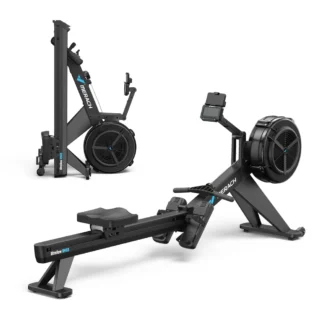
 The MERACH UltraRow R60N rowing machine gives you both the natural feel of air resistance and the added control of magnetic resistance. It’s designed for anyone looking for tough cardio, HIIT, or full-body workouts at home rather than at the gym.
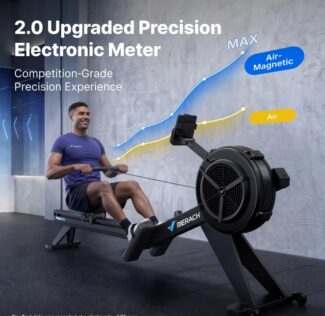
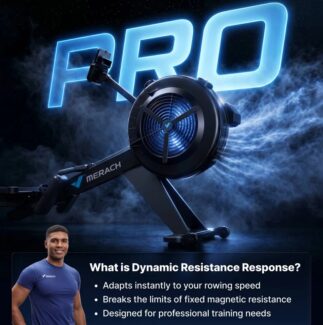
The air system adjusts to how fast you row, and the magnetic system lets you add more resistance when you want a challenge. Together, they can provide up to 25% more resistance at 25 strokes per minute, peaking at 900 newtons at 28 strokes per minute.
What Makes the MERACH UltraRow R60N Different?
What makes the UltraRow R60N different is its mix of air and magnetic resistance. With air resistance, the harder you pull, the more resistance you get, which feels natural. The magnetic resistance lets you fine-tune the challenge, making it great for intense intervals and strength training.
MERACH includes a performance monitor to track your workouts, a long 53-inch aluminum rail, and support for multiple fitness apps. These features help you follow your progress and bring more structure to your daily training.
A Roomy, Heavy-Duty Design
A rowing machine needs to feel secure when the pace picks up. The MERACH UltraRow R60N supports users weighing up to 500 pounds and accommodates a broad published height range of 3 feet 11 inches to 6 feet 10 inches. That makes it a practical option for households with several users or taller athletes who may feel cramped on compact rowers.
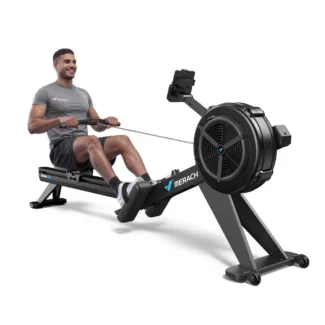
But just having strong resistance and a big frame doesn’t mean this rower is perfect for everyone. Comfort, noise, storage, app options, and value are important too. In this review, I’ll go over the details to help you decide if the MERACH UltraRow R60N is a good fit for your home gym.
Keep reading for my full review below!
Product: MERACH UltraRow R60N Rowing Machine
Price: For a great deal on this rower, simply go to MERACHFit.com
Warranty: 2-year limited warranty if registered with MERACH within the first 14 days; otherwise, it’s a 1-year limited warranty
Affiliate Disclosure: As a MERACH Affiliate Program participant, I earn commissions on purchases made through links in this post. Full disclosure
Details and Specifications
- Frame: Iron + Aluminum + ABS Plastic + Electronics
- Dimensions: 94 L x 20 W x 34.5 H inches
- Storage Dimensions: 35.8 L x 27.6 W x 52.6 H inches
- Product Net Weight: 86.6 lbs
- Maximum User Weight: 500 lbs
- Resistance Type: Magnetic and Air
- Fan Blades: 32
- Flywheel Weight: 3.5 lbs
- Resistance Levels: 10 (1 through 7 Air Only / 8 through 10 Air and Magnetic)
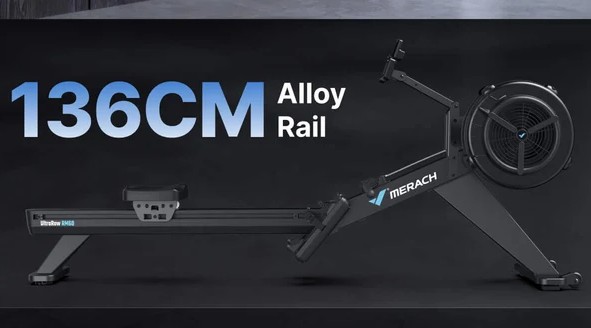
- Aluminum Slide Rail Length: 49.2 inches
- Seat Type: Foam Leather (ergonomic)
- Seat Height from Floor: 16.1 inches
- Pull Chain: Nickel-plated Steel
- Foot Pedal Adjustment: 7 Adjustable Lengths
- 5.3-inch Fitness Monitor: Tracks the Time, Distance, Calories, Strokes, Pulse, Avg. Pulse, SPM, Time/500m, and Watts
- Bluetooth Connectivity: Connects to the MERACH and Kinomap Fitness apps
- Warranty: 2-year limited warranty if registered with MERACH within the first 14 days; otherwise, it’s a 1-year limited warranty
MERACH UltraRow R60N Frame Construction: Built for Intense Rowing
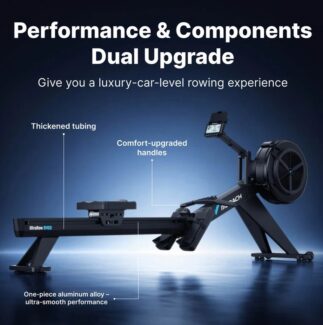
A rowing machine’s features won’t matter if its frame shifts or flexes under pressure. That’s why the MERACH UltraRow R60N features a robust iron-and-aluminum frame designed to remain stable during demanding home workouts.
Iron and Aluminum Provide a Strong Foundation
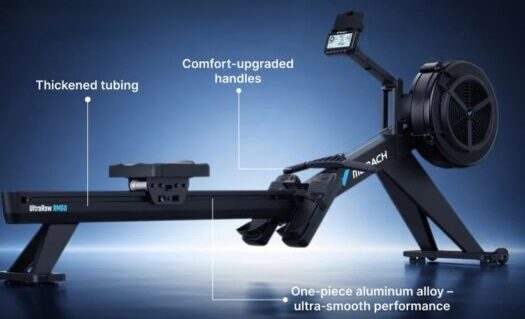
The MERACH UltraRow R60N combines iron and aluminum rather than using one material throughout its frame. Iron gives the machine a solid base and helps control unwanted movement during powerful strokes. Aluminum adds rigidity without excessive weight.
Together, these materials create a stable platform for regular cardio sessions, heavy resistance training, and high-intensity interval training.
One-Piece Construction Adds Rigidity
A one-piece cast aluminum section forms a key part of the R60N frame. This design relies on fewer connections across a major structural area, which may help limit flex and looseness over time.
That rigidity also supports smoother seat travel. As the user moves through each drive and recovery, the rail stays aligned, providing a more consistent rowing feel.
A 500-Pound Weight Capacity
The MERACH UltraRow R60N supports users weighing up to 500 pounds. This high limit makes the rower suitable for a broad range of body types and signals substantial structural support. However, the frame must manage more than the user’s resting weight. It also handles the changing forces produced during every stroke. The base, rail, seat, foot supports, and connecting components work together to keep the machine steady.
Designed for High-Intensity Workouts
The UltraRow R60N combines air and magnetic resistance and offers up to 45% more peak resistance than MERACH’s stated comparison point. Harder resistance creates greater stress on the machine, especially during sprints and HIIT sessions.
Its rigid frame provides a dependable platform for these demanding efforts. Users can focus on timing, technique, and power rather than compensating for excessive rocking or twisting.
Stability Supports Better Rowing Form
A stable rower helps users follow the correct stroke sequence: push with the legs, swing the torso, finish with the arms, and reverse the movement during recovery.
The R60N’s firm platform cannot correct poor technique, but it removes a common distraction. Beginners can focus on consistency, while experienced rowers can apply more force with confidence.
Track Disassembly Simplifies Storage
Instead of using a hinged folding frame, the R60N allows users to remove the track for storage. This design preserves the rigidity of the main structure while reducing the machine’s storage footprint.
Removing the track takes more effort than folding a rail upward, so the R60N may work best in a dedicated workout area. Measure both the exercise space and intended storage location before buying.
Strong Construction Adds Weight
The MERACH UltraRow R60N weighs about 86.6 pounds. That weight helps it feel planted during forceful rowing, but it can make moving the machine between rooms more difficult.
This rower will suit users who value stability more than portability. If you need to move it regularly, keep the route clear and follow the manufacturer’s handling instructions.
Is the MERACH UltraRow R60N Frame Well Built?
The MERACH UltraRow R60N has the essential features of a heavy-duty home rower: iron-and-aluminum construction, a rigid one-piece aluminum section, and support for users weighing up to 500 pounds.
It isn’t the lightest or fastest machine to store. Still, its sturdy construction makes sense for larger users, experienced athletes, and anyone planning to perform high-intensity rowing workouts at home.
MERACH UltraRow R60N Seat, Footrests, and Pulling Handle: A Closer Look at Comfort
A rowing machine can deliver excellent resistance and still feel wrong. Why? The parts that connect your body to the machine matter just as much as the resistance system. The seat supports every stroke. The footrests create a stable base. The pulling handle transfers power from your legs and core into the drive.
The MERACH UltraRow R60N gets these basics right. Its widened seat, adjustable footrests, and textured handle aim to make each rowing session more comfortable and controlled.
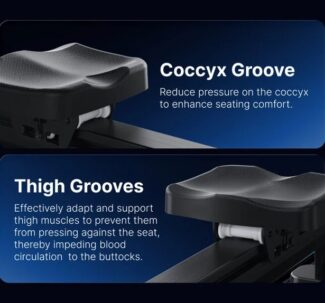
A Wide Seat Built for Better Support
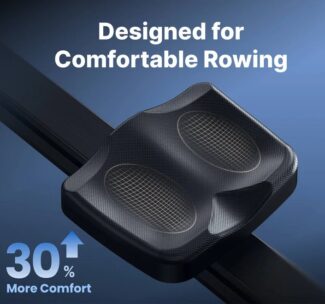
The MERACH UltraRow R60N features a widened, ergonomic seat. The broader shape gives you more room than a narrow racing-style seat. That extra width can make a noticeable difference during longer workouts. It spreads your weight across a larger area and helps you settle into a natural rowing position. You can focus on your stroke instead of constantly shifting around.
The seat travels along a 53-inch aluminum rail. This long rail provides ample space for users to extend their legs while driving. It also allows the seat to move through a full rowing stroke without making the motion feel cramped.
Smooth seat travel matters, too. Any sticking or uneven movement can disrupt your rhythm. A clear rail lets the seat roll freely and helps every stroke feel more consistent. For the best results, keep the rail and seat wheels clean. Dust, hair, and debris can collect around these areas. Wipe the rail after regular use and inspect the wheels before sitting down.
Adjustable Footrests Create a Secure Base
Your feet start the rowing stroke. If they slide or sit in the wrong position, the rest of your form can suffer. The MERACH UltraRow R60N uses adjustable footrests to accommodate different foot sizes. This lets you position each foot so the strap crosses the widest part of the shoe.
That placement keeps your feet secure without restricting movement. Your heels should still lift slightly as you move toward the catch. At the same time, the straps should prevent your feet from pulling away during the recovery. A secure setup helps you push through your legs with more confidence. It can also reduce unwanted movement in your knees and ankles.
Take a moment to adjust the footrests before every workout, especially if several people use the rower. A small change in foot position can affect the entire stroke.
When you sit down, check three things:
- Both footrests sit at the same height.
- The straps feel snug but not painfully tight.
- The straps cross the widest part of your feet.
Once the fit feels right, drive through your feet while keeping your knees aligned. Avoid letting them collapse inward or flare too far outward.
A Textured Pulling Handle for a More Reliable Grip
The MERACH UltraRow R60N comes with a plastic pulling handle and a textured gripping surface. The texture helps your hands maintain contact as your workout intensifies. A dependable grip matters during hard intervals. Sweat can make a smooth handle difficult to control. Added texture reduces slipping and lets you pull with a lighter, more relaxed hold.
That last point is important. You do not need to squeeze the handle as hard as possible. A tight grip can tire your hands and forearms before your legs and lungs reach their limit. Instead, wrap your fingers around the handle and keep your thumbs underneath it. Hold firmly enough to stay in control. Keep your wrists flat as you pull.
At the end of the drive, bring the handle toward your lower ribs. Keep your elbows close to your body. Then extend your arms before bending your knees on the recovery. This sequence helps the handle travel in a clean line. It also stops the pulling rope from moving up and down more than necessary.
How These Contact Points Work Together
The seat, footrests, and handle do not work separately. They create the three main contact points between you and the MERACH UltraRow R60N. Your feet start the drive. The seat carries your body along the rail. The handle finishes the stroke.
When all three feel secure, it becomes easier to maintain good rowing form. You can push with your legs, hinge through your hips, and finish with your arms in one fluid motion. Poor positioning creates the opposite effect. Loose straps waste power. A tense grip tires your arms. An unstable sitting position makes it harder to move smoothly.
Set up each contact point before you begin. The process takes less than a minute and can improve the entire workout.
Are the MERACH UltraRow R60N Contact Points Comfortable?
The MERACH UltraRow R60N offers a practical comfort setup for home rowing. Its widened ergonomic seat provides generous support. The adjustable footrests help users find a secure position. The textured pulling handle encourages a steady grip during easy rows and harder intervals. These parts may seem simple, but you interact with them during every stroke. Together, they help the R60N feel stable, accessible, and ready for repeat workouts.
If comfort is a major factor in your search for a rowing machine, the MERACH UltraRow R60N deserves your attention. Its seat, footrests, and handle support the one thing every good rower needs: smooth, confident movement from the catch to the finish.
MERACH UltraRow R60N Resistance System: Air and Magnetic Power Combined
Resistance shapes almost every part of a rowing workout. It affects the feel of each stroke, the intensity of your session, and how easily you can switch between steady cardio and hard intervals.
The MERACH UltraRow R60N takes a different approach from a standard air rower. It combines air and magnetic resistance into a single system. This hybrid design gives you the natural response of air at lower settings and extra force when you need a tougher workout.
How the Dual-Resistance System Works
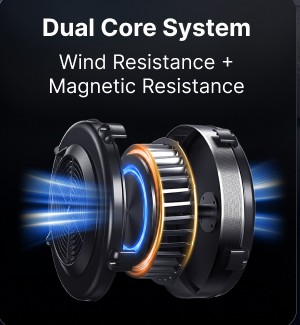
The MERACH UltraRow R60N offers 10 adjustable resistance levels. Levels 1 through 7 use air resistance. A 32-vane flywheel moves air as you pull the handle. The harder and faster you row, the more resistance the flywheel creates. This response makes each stroke feel dynamic. Easy pulls stay manageable. Powerful pulls push back harder.
At levels 8 through 10, the machine adds magnetic resistance. The magnetic system increases the load without forcing you to rely only on a faster stroke rate. You can row at a controlled pace and still feel substantial resistance. That combination gives the R60N a wider training range than a basic air rower.
Adjust Resistance With the Shift Lever
The MERACH UltraRow R60N uses a shift lever to control its resistance levels. The lever makes adjustments quick and easy. You can move through the settings with a direct mechanical action instead of tapping through menus or opening an app. The selected level remains clear, so you know how much resistance you have chosen.
Its placement also helps you make changes without disrupting the flow of your workout. This can be especially useful during interval sessions. You can raise the resistance for a hard effort and lower it again for recovery. The lever also gives the rower a more athletic feel. Rather than hiding resistance controls in the console, MERACH puts the adjustment within easy reach.
Air Resistance for Natural, Responsive Rowing
Air resistance responds directly to your effort. If you slow down, the resistance eases. If you drive harder with your legs and accelerate the handle, it rises.
This self-regulating feel works well for several types of exercise:
- Warm-up and cooldown
- Longer aerobic sessions
- Technique practice
- Moderate full-body workouts
- Pace-based training
The lower seven settings rely on the flywheel’s air resistance. They let you build speed and establish a steady rhythm without adding the heavier magnetic load. Beginners can use these settings to focus on form. Experienced rowers can use them for endurance work or high-cadence sessions.
Magnetic Resistance for More Demanding Workouts

The R60N introduces magnetic resistance at level 8. Levels 8 through 10 combine that magnetic load with the existing air resistance. This creates a heavier pull. It also lets the machine increase resistance without depending entirely on added airflow.
These upper settings suit:
- High-intensity interval training
- Short sprints
- Power-focused rowing
- Low-cadence strength sessions
- Challenging finishing intervals
The extra load can be especially useful during HIIT. You can raise the resistance for a hard work interval, recover at a lower setting, and repeat. You can also slow your stroke rate while maintaining a demanding pull. That makes it easier to focus on leg drive and stroke power rather than chasing speed alone.
How Much Resistance Does the R60N Produce?
MERACH states that the dual system delivers up to 25% more resistance at 25 strokes per minute. The machine can also reach a peak resistance of 900 newtons at 28 strokes per minute. These figures matter because they show how the magnetic system strengthens the air rower’s upper range.
The R60N does not simply offer more numbered settings. It adds meaningful resistance for harder training. MERACH also describes the dual system as providing substantially more peak power than a conventional air-only setup. Actual resistance will still depend on your selected level, stroke rate, and pulling force.
Why Combine Air and Magnetic Resistance?
Air and magnetic rowers each have strengths. Air resistance feels lively and responsive. It automatically reacts to your effort. Yet handling a heavy load usually requires you to pull faster, which can increase fan noise. Magnetic resistance stays controlled across different stroke rates. It can create a stronger pull without requiring a dramatic increase in speed.
The MERACH UltraRow R60N combines those qualities. The air system handles lighter and moderate rowing. The magnetic system steps in when you select the top three levels. This setup makes the machine more flexible. You can use one rower for relaxed cardio, structured endurance work, hard intervals, and power training.
How the Shift Lever Helps During Interval Training
Resistance changes need to be fast during interval sessions. A complicated control system can break your rhythm and waste valuable workout time. The R60N’s shift lever keeps the process simple. You can set the lever to a lighter level during recovery, then move it higher before your next work interval.
For example, you might row at a moderate air-resistance level for two minutes. You could then shift to level 8 or above for a short, powerful effort. After the interval, move the lever back down and recover. This hands-on control also makes it easier to repeat the same resistance pattern. You can return to a familiar lever position instead of navigating digital settings on every round.
Always make adjustments with control. Avoid reaching suddenly or twisting your body while rowing at full speed.
Does Higher Resistance Mean a Better Workout?
Not always. A high resistance setting can make each stroke harder, but it can also hurt your technique. You may shorten the stroke, pull with your arms too early, or lose a smooth recovery. Use a setting that lets you maintain good form. Push through your legs first. Keep your core stable. Finish the stroke with your arms rather than starting with them.
For longer sessions, a low or medium setting often works best. It lets you hold a steady pace without exhausting your muscles too soon. For brief intervals, levels 8 through 10 can add the challenge you need. The goal is to choose resistance that fits the workout, not to keep the machine at its highest level every time.
How to Choose the Right Resistance Level
Start low if you are new to rowing. Learn the stroke sequence before adding a heavier load.
Use the shift lever to make gradual changes:
- Choose lower settings for warmups, recovery, and technique practice.
- Use middle settings for steady cardio and longer workouts.
- Select levels 8 through 10 for heavier intervals and power training.
Treat these ranges as a guide. Your fitness level, technique, and workout plan matter more than the number itself. If your movement becomes short or uneven, shift down. If you can complete every interval with little effort, move the lever up one level at a time.
Is the R60N Quiet?
The air flywheel will produce some sound. That is normal for an air-resistance rowing machine. The fan moves more air and becomes louder as you row faster. The hybrid system may help during heavier workouts because the machine can add magnetic resistance rather than relying solely on higher fan speed. This gives you a tougher pull at a more controlled cadence.
It will not feel silent like a magnetic-only rower. Still, the air-and-magnetic combination offers a useful balance between responsive resistance, high output, and noise control.
Who Will Benefit From This Resistance System?
The MERACH UltraRow R60N should appeal to people who want flexibility from a home rowing machine. Beginners can start with the lower air-resistance settings. Regular exercisers can use the middle range for cardio. Stronger athletes can move the shift lever into the combined air-and-magnetic range for HIIT and power work.
The wide range may also suit households with multiple users. Each person can choose a different lever position based on their strength, experience, and workout plan.
People who value simple controls may also appreciate the shift lever. It gives you a quick physical adjustment without making you depend on a touchscreen or app.
A Versatile System With Direct Control
Its lower settings preserve the responsive feel of air resistance. Its upper settings add magnetic force for heavier, more controlled pulls. The shift lever puts all 10 levels within easy reach and makes quick changes possible during interval sessions.
This combination supports easy rows, steady cardio, HIIT, and demanding power workouts. It also lets the machine adapt as your strength and fitness improve.
More resistance cannot replace good technique. But with smart adjustments and consistent training, the R60N’s hybrid resistance system gives you plenty of room to progress.
MERACH UltraRow R60N Fitness Monitor: Clear Data and Bluetooth Connectivity
A rowing machine can deliver smooth resistance and a comfortable stroke, but you still need useful feedback if you want to train with purpose. That’s where the fitness monitor on the MERACH UltraRow R60N Rowing Machine comes in.
Rather than filling the console with entertainment features, MERACH equips the R60N with a straightforward performance display. It keeps your key numbers visible as you row, while Bluetooth connectivity lets you expand your training with compatible apps and devices.
A 5.3-Inch Backlit Display Built for Training
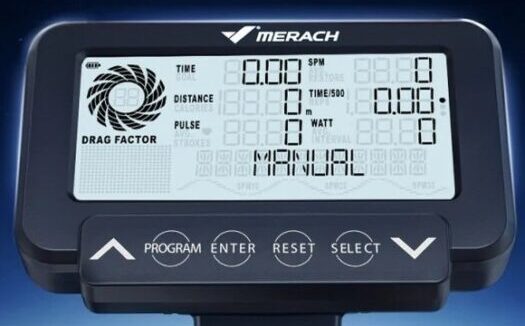
The MERACH UltraRow R60N uses a 5.3-inch backlit LCD monitor. Its anti-glare design helps keep the workout data readable, and the backlight makes it easier to see in dim rooms.
That visibility matters more than you might expect. During a hard interval, you don’t want to lean forward or break your rhythm just to check your pace. A clear monitor lets you glance at the data while maintaining a strong rowing position.
The display is also adjustable, so you can set a comfortable viewing angle. This helps accommodate different users and reduces the risk of overhead lighting obscuring the screen.
Which Workout Metrics Does the R60N Monitor Track?
The MERACH UltraRow R60N fitness monitor provides real-time performance feedback. Its tracked metrics include:
- Time
- Distance
- 500-meter split time
- Pace
- Wattage
- Stroke rate
- Stroke count
- Calories burned
- Drag factor
- Heart rate
Together, these measurements provide a useful snapshot of your workout. Beginners can focus on time, distance, and stroke rate, while experienced rowers can use split times and watts to plan more precise sessions.
Bluetooth Connectivity Expands Your Training Options
The MERACH UltraRow R60N includes Bluetooth connectivity, allowing the rower to communicate wirelessly with supported fitness apps and compatible devices. Instead of limiting your workout data to the built-in LCD, Bluetooth lets you view it on your phone or tablet in a larger, more interactive format.
This setup gives you flexibility. You can use the monitor alone for a quick, distraction-free workout, then connect a mobile device for additional tracking or app-based guidance. Because the R60N includes a device holder, you can keep your screen within view as you row.
Bluetooth connectivity may also make it easier to review workout information over time. The built-in monitor shows what’s happening during the current session, while a compatible app offers a more convenient place to track trends and compare workouts.
Connecting the R60N to the MERACH App
To use the rower’s connected features, install the MERACH app on a compatible phone or tablet and enable Bluetooth on that device. Wake the fitness monitor by starting to row, then open the app and follow its instructions to find and connect the machine.
Keep your mobile device near the rower during the initial pairing process. If the app doesn’t detect the R60N, confirm that Bluetooth permissions are enabled, close and reopen the app, and wake the monitor again. It may also help to disconnect other nearby fitness equipment that could interfere with pairing.
The exact menus and setup sequence can vary by app version and operating system, so follow the current in-app instructions. Don’t assume the rower will pair through your phone’s standard Bluetooth menu unless MERACH specifically instructs you to connect it that way.
Bluetooth Heart-Rate Monitoring
The monitor can display heart rate data when you use a compatible external heart rate sensor. This adds another useful layer to your training by showing how your body responds to changes in pace and power.
During a steady cardio session, heart-rate feedback can help you avoid pushing too hard too soon. Interval training can show how quickly your heart rate rises during work periods and how quickly it falls during recovery.
Compatibility matters here. Bluetooth support doesn’t mean every watch, chest strap, armband, or app will connect automatically. Some smartwatches don’t broadcast heart rate data to exercise machines, even when both devices use Bluetooth. If heart-rate tracking is important to you, confirm that your preferred sensor can transmit data in a format supported by the R60N.
Pace and 500-Meter Split Time
The 500-meter split tells you how long it would take to row 500 meters at your current pace. It’s one of the most useful rowing metrics because it gives you immediate feedback without requiring you to finish a fixed distance first. If your split time drops, you’re rowing faster. If it rises, your pace has slowed.
You can use this number to manage longer steady rows, build interval sessions, or test your progress. For example, you might complete several short intervals while trying to maintain the same split time in each. That turns a general cardio workout into a measurable training session.
Split time can also reveal pacing mistakes. If you start too quickly, the monitor will show it before fatigue sets in. You can then ease back and settle into an effort you can sustain.
Wattage Shows How Much Power You Produce
Watts measure your power output. While pace tells you how quickly you’re rowing, wattage reflects how much work you’re producing at that moment. This metric works especially well for high-intensity interval training. You can set a target wattage for each work period, recover at a lower output, and compare your power across multiple rounds.
Watts also help separate effort from guesswork. Two intervals may feel similar, but the monitor can show whether your power stayed steady or dropped as you became tired. Over time, you can use that information to see whether you’re getting stronger and maintaining output for longer.
Stroke Rate Helps You Control Your Rhythm
Stroke rate measures the number of strokes per minute, often abbreviated as SPM. It tells you how quickly you move through each rowing cycle.
A higher stroke rate doesn’t automatically mean a better workout. You can rush through strokes without producing much power, whereas a slower, more controlled rhythm may yield stronger results. The goal is to find a stroke rate that matches the session.
For a relaxed endurance row, you might use a lower, steadier rate. Short sprints and HIIT intervals usually call for a faster rhythm. Because the R60N displays stroke rate in real time, you can make small adjustments before your technique begins to fall apart.
This is particularly helpful for beginners. Watching SPM encourages a consistent cadence and helps avoid hurried, choppy rowing.
Drag Factor Adds More Detail to Your Training
The drag factor describes how the rowing machine responds during the drive. Unlike a simple resistance-level number, it provides a more specific reference point for the feel of each stroke. This can help you recreate a preferred setup across different workouts. It also gives experienced rowers another way to compare sessions and fine-tune their training.
That extra detail fits the R60N well. The machine combines air and magnetic resistance, so its monitor needs to do more than display a basic resistance setting. Drag-factor feedback gives users a clearer way to understand and repeat the conditions under which they row.
Why the R60N Monitor Works Well for HIIT

The MERACH UltraRow R60N is designed for demanding rowing sessions, and its monitor supports that goal. Metrics such as watts, split time, stroke rate, and heart rate give you several ways to define an interval.
You could structure a workout around time, distance, power, or pace. For instance, you might alternate 30 seconds of hard rowing with 60 seconds of easy recovery, aim for a fixed wattage during each work interval, or complete repeated 500-meter efforts while maintaining a consistent split.
Real-time feedback also helps you pace the opening rounds. It’s easy to attack the first interval and leave nothing for the rest. Watching the monitor encourages a more disciplined approach, especially when you want consistent performance across several rounds.
Bluetooth adds another option. You can connect a compatible app for guided sessions or a more visual display while still using the LCD for quick checks during each interval.
A Focused Monitor Rather Than a Built-In Touchscreen
The R60N doesn’t try to replace a tablet or television. Its LCD monitor focuses on workout numbers rather than streaming entertainment or displaying classes on an integrated touchscreen.
That will appeal to users who want quick access to performance data without navigating a large console. A conventional LCD may also feel less distracting when you’re trying to concentrate on technique and intensity.
At the same time, Bluetooth connectivity means you aren’t completely locked into the basic display. You can mount your own phone or tablet and use a compatible app for a more connected experience. This approach gives you a simple built-in monitor without forcing you to pay for a large screen attached permanently to the rower.
How to Get More Value From the Fitness Monitor
You don’t need to watch every number at once. Choose one or two metrics that fit the goal of the day. For a steady endurance workout, track time, stroke rate, and heart rate. For interval training, focus on watts and split time. If you’re practicing technique, use stroke rate to keep your rhythm controlled while paying attention to the quality of each drive and recovery.
It also helps to record your results. Note your distance, average pace, workout duration, and any other metric tied to your goal. Those numbers will give you a baseline and make gradual improvement easier to spot.
Try not to chase faster times during every session. Some rows should build aerobic fitness, while others should develop power or reinforce good form. The monitor works best as a guide, not as a reason to turn every workout into a test.
Is the MERACH UltraRow R60N Fitness Monitor Any Good?
The fitness monitor is a strong match for the MERACH UltraRow R60N. It offers a readable, adjustable backlit display and covers the key data needed for casual cardio, structured endurance work, and hard interval sessions.
Its support for pace, watts, 500-meter splits, stroke rate, drag factor, and heart-rate data gives it more training value than a basic home-rower console. Bluetooth connectivity adds flexibility by letting you pair the machine with supported apps and compatible devices.
It won’t satisfy everyone. Buyers seeking a large integrated touchscreen, streaming services, or a highly visual built-in training platform may want a more entertainment-focused machine. But if you care about useful data, wireless connectivity, easy readability, and fewer distractions, the R60N monitor checks the right boxes.
The best fitness monitors don’t demand your attention. They give you the right number at the right moment, then let you get back to rowing. That’s exactly what the MERACH UltraRow R60N aims to do.
MERACH vs. Kinomap: Which Fitness App Fits Your Home Workouts?
The right fitness app can make indoor exercise feel less repetitive and give you a reason to return to your bike, treadmill, or rowing machine. The trick is choosing one that fits your equipment, training style, and budget.
MERACH and Kinomap all make home workouts more interactive, but they take noticeably different approaches. MERACH supports the brand’s connected equipment with guided training and workout tracking. Kinomap uses real-world route videos to help you explore new places without leaving home.
Here’s how each fitness app works, what it costs, and who will get the most from it.
MERACH App: A Practical Companion for MERACH Fitness Equipment
The MERACH app acts as a central training hub for compatible MERACH machines. It can connect to the brand’s exercise bikes, rowing machines, treadmills, elliptical trainers, and select vibration plates.
Once connected, the app lets you follow guided workouts and monitor training data in real time. Depending on the equipment, it may also provide real-time machine control. This creates a more structured experience than simply watching the numbers on a basic console.
MERACH targets everyday home exercisers rather than serious virtual racers. Its straightforward design can work well for beginners, casual users, and anyone who wants a little guidance without having to join a highly competitive online community. It also keeps workouts and equipment inside the same system, which can simplify setup.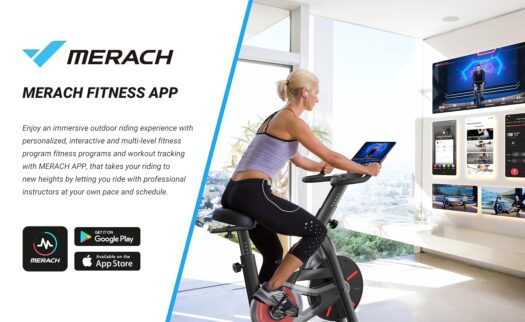
How Much Does the MERACH App Cost?
The MERACH app is free to download and offers free workout courses and training features. That makes MERACH appealing to people who want connected training without adding another recurring bill.
Who Should Choose MERACH?
MERACH makes the most sense if you already own—or plan to buy—compatible MERACH fitness equipment. It offers an accessible way to track exercise and add structure to home workouts without committing to a paid app.
It may feel limited if you want large multiplayer events, serious online racing, or a huge library of routes from around the globe. For guided workouts and basic connected training, though, it covers the essentials without overcomplicating things.
Kinomap: Explore Real Routes From Your Home Gym
Kinomap trades animated scenery for recorded outdoor routes. Its library contains thousands of geolocated videos that let you cycle, run, walk, or row through real destinations while using indoor fitness equipment.
You might ride along a coastal road, run through a city, or row down a scenic waterway—all from your home gym. The scenery progresses with your effort, so the experience feels connected to your pace rather than like an ordinary workout video.
Kinomap supports a broad range of exercise bikes, bike trainers, treadmills, rowing machines, and other cardio equipment. Interactive functions depend on the machine. Some models can send workout data to the app, while others may also adjust resistance or incline to match the route.
In addition to scenic routes, Kinomap offers coached sessions and connected workouts. That mix gives you options: follow an instructor when you want direction, or choose a destination when you’d rather explore.
How Much Does Kinomap Cost?
Kinomap offers a free version with limited content and a 14-day Premium trial. In the United States, Premium costs $11.99 per month or $89.99 per year.
Monthly and annual subscribers can also add a family option through the Kinomap website. The family upgrade supports up to four additional users, though availability and pricing may vary by country. Kinomap no longer sells its former lifetime plan as of January 1, 2026.
Who Should Choose Kinomap?
Kinomap works especially well for people who prefer real scenery to computer-generated courses. It also offers the broadest mix of activities among these apps, making it a useful option for households that own different types of cardio machines.
Its large compatibility range is a major strength, but not every machine supports every interactive feature. Take a minute to check the official equipment list before you pay. That small step can prevent a disappointing setup later.
Which Fitness App Is Best for You?
Choose MERACH if you own compatible MERACH equipment and want guided workouts and tracking without a regular subscription.
Choose Kinomap if you want to train with real route videos, use a variety of cardio equipment, or explore a wide selection of recorded destinations.
No app wins every category. Kinomap offers more equipment and a wider variety of activities, and MERACH keeps connected training simple and affordable for owners of the brand’s machines. Pick the one that makes you most likely to exercise consistently. That matters far more than a long feature list.
How to Assemble and Maintain the MERACH UltraRow R60N Rowing Machine
Now that you know what the MERACH UltraRow R60N offers, it’s time to get it out of the box and ready for training. The sturdy construction is a plus once you start rowing, but it also means you shouldn’t rush the setup. A careful assembly protects the machine, improves stability, and helps you catch loose hardware or damaged parts before your first workout.
Maintenance is much easier. A quick wipe after each session, regular rail cleaning, and a few periodic checks should keep the rower moving smoothly.
This MERACH UltraRow R60N assembly and maintenance guide walks you through both the assembly and maintenance.
Check the Parts and Hardware
Use the official R60N manual to match each part with its diagram. You should also organize the bolts, washers, screws, and tools by assembly stage rather than leaving everything in one pile.
Do not substitute hardware unless MERACH approves the replacement. Two bolts may look similar but differ in length, thread, or strength. Using the wrong one could damage a threaded opening or weaken a structural connection.
As you inspect the parts, look for:
- Bent or cracked frame sections
- Damaged cables or connectors
- Missing washers or fasteners
- Cracks in the seat, footrests, or plastic covers
- Damage to the rail or seat rollers
- Loose parts inside the resistance housing
Stop and contact the manufacturer if you find structural damage. Assembly can’t correct a bent rail or cracked frame.
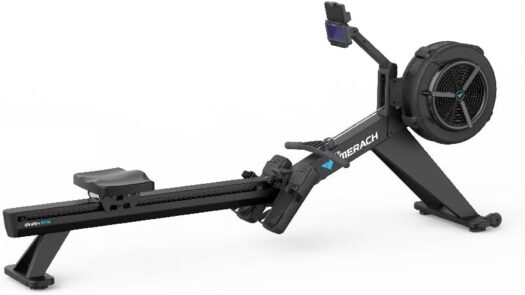
MERACH UltraRow R60N Assembly Instructions
Always treat the manual supplied with your machine as the final authority. Product revisions can change the hardware or assembly sequence. The process below provides a practical overview of the setup and highlights the details most likely to cause trouble.
One useful rule applies throughout the build: start every bolt by hand. Turn it a few times to confirm that it threads smoothly, then use the supplied tool. If you meet immediate resistance, remove the bolt and realign the parts rather than forcing it.
Step 1: Assemble the Seat Cushion
The official R60N assembly sequence begins with the seat cushion. Position the seat components in the orientation shown in the manual, insert the specified fasteners, and tighten them evenly.
Pay close attention to the direction of the seat. Installing it backward may feel strange once you sit down and could require you to undo part of the assembly.
If the seat arrives separate from its roller carriage, secure the cushion without overtightening the hardware. The fasteners should hold the seat firmly, but excessive force can damage threads or compress the mounting points.
Once assembled, set the seat aside on a clean surface. Don’t place the rollers directly on concrete or another rough floor.
Step 2: Attach the Rear Foot Tube
The rear foot tube supports the back of the rail and helps stabilize the rower during hard strokes. Align it with the mounting points, insert the correct bolts and washers, and tighten each side gradually.
Avoid fully tightening one side while the other bolt remains loose. Instead, start both bolts by hand, alternate between them, and bring the connection together evenly. This reduces the chance of pulling the tube out of alignment.
Check the orientation before tightening. If the rear support includes leveling feet or transport-related fittings, they must face the direction shown in the manual.
Step 3: Install the Seat on the Track
Follow the manual’s diagram to place the seat assembly onto the rail. The rollers should sit squarely on the running surfaces without binding or riding over an edge.
After installation, move the seat through its full range by hand. It should glide smoothly without scraping, wobbling excessively, or catching at one point. A small piece of packaging, a misaligned roller, or overtightened seat hardware can interfere with movement.
Never strike the seat carriage or force it down the rail. If it doesn’t fit correctly, remove it and check the orientation.
Step 4: Connect the Rail and Main Frame
This stage forms the core structure of the rowing machine. Align the rail with the main resistance unit and install the designated locking hardware.
Support the rail’s weight while making the connection. Letting it hang from a partially installed bolt could damage the mounting point or make it difficult to align the holes.
If the assembly includes an electrical cable or sensor connection at this joint, connect it before closing the frame. Hold connectors by their plastic housings rather than pulling on the wires. Match their alignment, press them together gently, and keep the cable away from sharp edges and moving parts.
Once the frame is joined, make sure the rail runs straight away from the front unit. Tighten the connection evenly according to the manual.
Step 5: Fit the Footrests and Straps
Install the left and right footrests in their proper positions. Check the labels carefully because a footrest designed for one side may not align correctly on the other.
The R60N footrests provide seven foot-pedal length settings. Adjust each side to the same position, and choose a setting that allows the strap to cross the widest part of your foot. Your heels should remain supported, while your ankles should still flex naturally at the catch.
Feed the straps through their buckles correctly, then pull on them to confirm they hold. A twisted strap can loosen during a workout, creating an uneven foot position.
Step 6: Install and Position the Display
Mount the display and its support as shown in the official instructions. If the display cable requires a connection, align the plugs carefully and avoid pinching the wire under the bracket.
The R60N uses self-generated power in addition to four AA batteries. Install the batteries in the correct orientation if they aren’t already fitted. Do not mix old and new batteries or combine different battery types.
Adjust the display so you can read it without having to lean forward during a workout. Tighten the bracket enough to prevent drifting, but leave any intended adjustment joint functional.
Step 7: Complete the Final Hardware Check
Return to each structural fastener once the entire machine is resting on the floor. Tighten the hardware securely, following any torque guidance in the manual.
Pay particular attention to the connections at the:
- Rear support
- Seat assembly
- Rail and main frame
- Footrests
- Display bracket
Do not assume that factory-installed hardware is automatically tight. Inspect all visible nuts, screws, and bolts before using the machine.
A Simple MERACH UltraRow R60N Maintenance Schedule
The easiest maintenance plan is the one you’ll actually follow. Tie small tasks to your normal training routine and reserve a few minutes each month for a closer inspection.
After Every Workout
Wipe away sweat, clean visible marks from the rail, and return the handle to its normal resting position. Loosen the foot straps so they’re ready for your next session.
Take a moment to notice new noises or changes in the seat movement. Catching a problem early is far easier than diagnosing it after weeks of use.
Every Week
Give the rower a closer visual inspection. Check the rail, seat rollers, handle, straps, footrests, and frame. Remove dust from around the front housing without opening it.
Examine the pulling mechanism for visible wear or contamination. If you see fraying, cracking, or unusual discoloration, stop using the rower and ask MERACH for guidance.
Every Month
Check the accessible bolts, nuts, and screws. Repeated rowing can gradually loosen hardware, especially at structural joints. Tighten anything that has developed play, but don’t overtighten fasteners or strip their threads.
Inspect the:
- Rail-to-frame connection
- Rear support hardware
- Footrest mounts
- Seat attachment
- Display bracket
- Leveling feet
Rock the frame gently and listen for clicking. A sound at a joint often points to loose hardware.
Every Few Months
Perform a more thorough test. Move the seat across the entire rail, inspect the rollers, test each resistance setting, and check the handle’s return. Look for corrosion around fasteners and examine the floor beneath the machine for black dust, metal particles, or fluid.
Some rowing machine maintenance guidance recommends checking chain tension and applying a light chain lubricant periodically. Only do this if the R60N manual identifies the pulling component as a serviceable chain and provides instructions for it. Never pour lubricant into the resistance housing or guess where it belongs.
Replace the display batteries when the screen becomes dim, slow, or unreliable. If you expect to store the machine for a long period, remove the batteries to reduce the risk of leakage.
Maintaining the R60N Air and Magnetic Resistance System
Keep the air intake area free from dust and maintain open space around the resistance housing. Don’t drape towels or clothing over the housing while rowing, since airflow is part of the machine’s operation.
The magnetic resistance mechanism generally requires little routine care. Focus on external cleaning and normal function. If the resistance lever stops responding, the machine develops a scraping noise, or the resistance changes unpredictably, contact MERACH rather than removing covers.
Opening the resistance housing without approved instructions can expose moving parts, complicate repairs, and potentially affect warranty coverage.
How to Store the MERACH UltraRow R60N

Store the rower in a clean, dry indoor space. Avoid garages, basements, or other areas with high humidity, major temperature changes, or direct exposure to water. Moisture can affect hardware, electronics, and other components over time.
The R60N has a detachable track, which can reduce the space it occupies when not in use. Follow the manual’s track-disassembly procedure rather than loosening random frame bolts.
Before separating the track:
- Finish your workout and let all moving parts come to a stop.
- Remove nearby objects and make sure you have room to handle the rail.
- Secure the seat so it cannot slide unexpectedly.
- Support the rail as you release the approved connection.
- Keep locking pins and hardware with the machine.
- Store each section where it cannot fall or be knocked over.
Don’t stand the fully assembled rower upright unless MERACH explicitly approves that storage position. A heavy machine can tip if it isn’t designed or secured for vertical storage.
When moving the R60N, use its designated transport points and wheels. Keep your back neutral, lift with your legs, and ask for help if the machine feels awkward. Never drag the rower by its handle, display, seat, or foot straps.
Final Thoughts on MERACH UltraRow R60N Care
Assembling the MERACH UltraRow R60N is mostly a matter of preparation and patience. Organize the hardware, follow the official sequence, support the heavier sections, and start every fastener by hand. Once the machine is together, test the seat, footrests, handle, resistance, and display before you train hard.
From there, maintenance stays refreshingly simple. Wipe away sweat after each session, keep the rail clean, inspect the hardware every month, and pay attention when the machine sounds or feels different.
That small amount of care helps the R60N remain stable, smooth, and ready to row—whether you’re settling in for steady cardio or attacking another round of intervals.
MERACH UltraRow R60N Pros and Cons
The MERACH UltraRow R60N combines air and magnetic resistance with a sturdy, high-capacity frame. It delivers challenging full-body workouts, but its size and connected features won’t suit every home gym. Here’s what to consider before buying.
Pros
- Delivers versatile dual resistance: Levels 1–7 use air resistance, while levels 8–10 add magnetic resistance. This broad range supports steady endurance rows, intense intervals, and quick exercise breaks.
- Provides a smooth, challenging pull: The 32-blade fan and 3.5 kg flywheel create fluid resistance, while the magnetic system adds extra tension at higher settings.
- Handles demanding workouts: Its heavy-duty frame, one-piece rail, and 500-pound user weight capacity give the rowing machine a planted, stable feel during harder sessions.
- Fits a wide range of users: MERACH recommends the R60N for people from 3 feet 11 inches to 6 feet 10 inches tall. The long rail, seven-position footrests, wide pedals, and roomy handle help users of different sizes find a comfortable setup.
- Makes getting on and off easier: The elevated 16.1-inch seat can feel more accessible than a low rowing position, especially for people with limited mobility.
- Tracks useful workout data: The adjustable 5.3-inch backlit, anti-glare LCD displays time, distance, calories, strokes, stroke rate, pulse, watts, 500-meter pace, and average results.
- Works without an app or wall outlet: You can adjust the resistance manually and follow your workout on the console without connecting a phone, subscribing to a service, or positioning the machine near an electrical socket.
- Adds optional app-based training: Bluetooth connectivity lets you use the MERACH app for timed sessions, distance goals, workout history, guided training, and activity challenges.
- Keeps entertainment within view: The adjustable holder supports a phone or small tablet, making it easy to watch a show, follow a class, or monitor the app while rowing.
- Supports shorter, more frequent workouts: The straightforward manual controls let you sit down and start rowing quickly—handy when you only have five, 10, or 15 minutes.
- Simplifies setup and repositioning: The two main sections connect without screws, and the front transport wheels let one person move the assembled machine around the room.
Cons
- Takes up considerable floor space: At approximately 93.9 inches long, the MERACH UltraRow R60N needs a dedicated exercise lane. It may overwhelm a small bedroom, office, or shared living area.
- Doesn’t fold in the traditional sense: Instead of pivoting upright in one piece, the rear rail disconnects from the front assembly. This system shortens the stored footprint, but users still need a suitable place for both substantial sections.
- Locks the strongest resistance behind the top settings: Users only get air-plus-magnetic resistance at levels 8–10. Levels 1–7 rely on air resistance alone.
Choose the MERACH UltraRow R60N if you want powerful dual resistance, a stable frame, broad user compatibility, and straightforward full-body cardio at home. Consider another rowing machine if you have limited floor space, need near-silent operation, want a large integrated touchscreen, or plan to move your equipment between rooms often.
MERACH UltraRow R60N Review Summary: Cardio and Strength Training
The MERACH UltraRow R60N Rowing Machine blends air and magnetic resistance to create challenging, adaptable home workouts. It works for steady cardio, hard sprints, and HIIT sessions, giving beginners room to improve and experienced rowers enough resistance to keep progressing.
Dual Resistance for More Training Options
The air system responds to your effort: the harder and faster you row, the more resistance you feel. Magnetic resistance adds another layer of control, with seven settings that make it easy to adjust workout intensity.
MERACH says the R60N delivers up to 25% more resistance at 25 strokes per minute, peaking at 900 newtons at 28 strokes per minute. That higher resistance ceiling makes it a strong option for athletes who find basic home rowers too easy.

Made for HIIT and Endurance Workouts
The UltraRow R60N works well for several training styles. You can lower the resistance, settle into a consistent rhythm, and build cardiovascular endurance over a longer session. When you want more intensity, increase the resistance and alternate hard sprints with recovery periods.
Its 32-blade fan and 3.5-kilogram flywheel support a responsive rowing motion. The manual resistance lever also lets you adjust the challenge directly, which keeps workout changes quick and straightforward.
This flexibility makes the R60N a practical choice for households with multiple users. Beginners can start at a manageable setting, while stronger athletes can turn up the resistance and push through demanding intervals.
Built for a Wide Range of Users
A 53-inch aluminum rail provides plenty of room for a full stroke. MERACH lists the machine for users between 3 feet 11 inches and 6 feet 10 inches tall, and its sturdy frame supports up to 500 pounds.
The competition-style monitor displays workout data as you row, helping you track your pace and progress. Multi-app support also gives you access to connected training options when you want more structure or variety.
Track Your Rowing Performance
The R60N includes a competition-style monitor that displays workout data while you row. Keeping key metrics visible helps you manage your pace, compare intervals, and measure progress from one workout to the next.
The machine also supports multiple fitness apps. App connectivity can make indoor rowing more engaging by adding structured sessions and giving you another way to review performance data. You’re free to follow a guided workout, chase a personal target, or simply row at your own pace.
Is the MERACH UltraRow R60N Worth It?
The MERACH UltraRow R60N stands out for combining responsive air resistance with magnetic resistance in a durable home machine. Its 500-pound capacity, 53-inch rail, ten resistance settings, and competition-style monitor give it the versatility to support both everyday cardio and tougher performance training.
If you’re ready for tougher cardio and more flexible home training, take a closer look at the MERACH UltraRow R60N to see how it fits your fitness goals.
Important Safety Note:
Before starting any new exercise program or using any equipment, it’s essential to consult your physician to ensure it’s safe for you. It is especially crucial if you have any medical or physical conditions that impact your ability to exercise properly or put your health at risk. Additionally, if you’re taking medication that affects your heart rate, blood pressure, or cholesterol levels, your doctor’s advice is vital in creating a workout plan that suits your needs.
Share Your Thoughts and Questions
I hope you found this detailed review of the MERACH UltraRow R60N Rowing Machine helpful. Feel free to share your thoughts or questions below. If you’ve tried the UltraRow R60N or similar machines, your experiences can help others decide. I also appreciate any feedback about my website or ideas for future topics. Your input helps build a helpful and friendly community.
I’m looking forward to hearing from you and continuing the conversation!
You May Also Like
Yosuda RM12 Rowing Machine Review: A Full Body Workout