Tabata Training: The 4-Minute Workout That Burns Fat Fast
Looking for a workout that fits into your busiest days and still delivers results? Meet Tabata — the high-intensity interval training (HIIT) method that’s as quick as it is effective. Whether you want to burn calories, boost endurance, or just wake up your fitness routine, Tabata might be your new favorite way to sweat.
What Is Tabata? The Origins of the 4-Minute Workout
Tabata training is named after Dr. Izumi Tabata, the Japanese researcher who developed this workout style in the 1990s. Unlike trendy fitness fads, Tabata is backed by science and has stood the test of time. The big appeal? Each session only lasts four minutes. No, that’s not a typo — but those four minutes will challenge you more than you think.
How Tabata Works: The Simple Formula
Tabata workouts follow a straightforward formula: Pick an exercise, go all out for 20 seconds, then rest for 10 seconds. Repeat this cycle eight times, and you’re done. It sounds easy, but don’t let the numbers fool you. Those 20-second bursts should be at maximum effort — the kind where you’re seriously questioning your life choices by round six.
Why Tabata Is So Effective
The secret behind Tabata’s power is intensity. By pushing yourself to your limits, you engage both your aerobic and anaerobic systems. This effort creates the famous “afterburn effect,” where your body continues burning calories even after you’ve finished your workout. In just four minutes, you can kick-start your metabolism and keep it revved up for hours.
Tabata’s Versatility: Any Exercise, Anywhere
One of the best things about Tabata is its flexibility. You can use almost any movement — squats, push-ups, burpees, jumping rope, mountain climbers — whatever gets your heart racing. The key is to give each 20-second interval your absolute best. Those 10 seconds of rest will feel short, but they’re just enough to catch your breath and get ready for the next round.
Tips for Starting Tabata Safely
Tabata is intense, so it’s smart to ease in. If you’re new to high-intensity workouts, try starting with four rounds instead of eight. Listen to your body and don’t be afraid to take longer breaks if you need them. If you’re new to exercise or have any health concerns, check with your doctor before giving Tabata a try.
The Bottom Line: Tabata Is Short, Sweet, and Seriously Effective
In a world where everyone’s short on time, Tabata proves you don’t need an hour-long gym session to see results. It’s efficient, challenging, and scientifically proven to work. If you’re looking for a workout that’s over before your coffee order is up — but still packs a punch — Tabata might be your perfect fit.
Get ready to make every second count. With Tabata, less really can be more — as long as you bring the intensity.
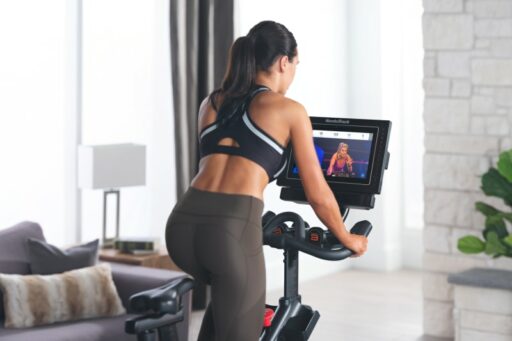
Why Spin Bikes Are Your Secret Weapon
Want to torch calories and build killer legs? Hop on a spin bike. These bad boys are perfect for HIIT workouts because they let you go from zero to full throttle in seconds. Plus, they’re way easier on your joints than running.
Here’s what makes spin bikes so great: you can work your entire lower body – quads, hamstrings, calves, you name it – while getting your heart pumping like crazy. And the best part? When doing those intense 20-second intervals, you don’t have to worry about traffic, weather, or finding a safe place to slow down. Just lift your feet off the pedals for your 10-second rest, catch your breath, and get ready to crush the next interval.
Think of it as having a pause button for your workout—something you can’t do on a regular bike unless you want to end up face-first in a bush. This start-stop control makes spin bikes perfect for interval training, especially if you’re new to HIIT or prefer a more controlled workout environment.
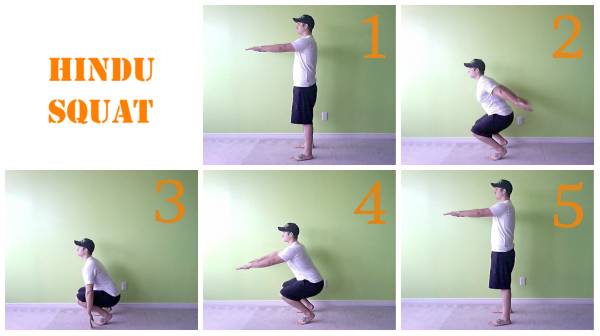
Why You Should Try Hindu Squats (Your Legs Will Thank You Later)
Want to level up your squat game? Meet the Hindu squat — your regular squat’s cooler, more flexible cousin.
Here’s what makes it unique: instead of stopping halfway like a regular squat (that awkward parallel-to-the-ground position), you’ll keep going until your fingertips kiss the ground. Think of it as the full commitment version of squatting. Your butt drops down toward your heels, and yes, it feels fantastic once you get used to it.
The best part? This full range of motion isn’t just showing off — it’s like hitting the turbo button on your workout. Your heart starts pumping faster, and muscles you didn’t know you had to wake up and join the party.
And let’s bust a myth while we’re at it: dropping it low won’t wreck your knees if you’re healthy. Researchers have found that going down in a squat is perfectly safe for healthy knees. So forget what your gym buddy told you about stopping at parallel — nature built the body to move through its full range of motion.
Give it a try. Start slow, focus on form, and soon, you’ll wonder why you ever settled for regular squats in the first place.
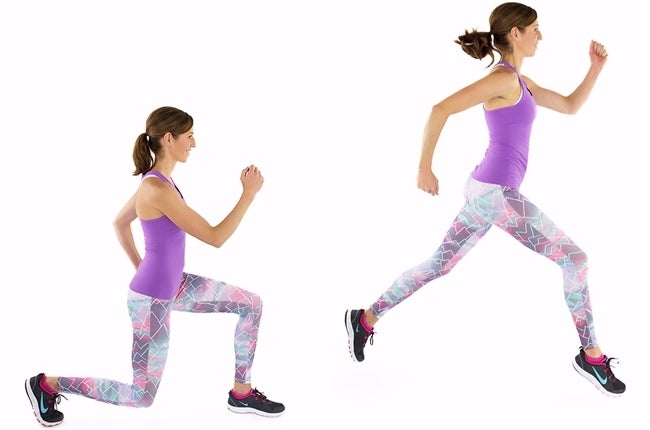
How to Master Jumping Lunges (Without Losing Your Mind)
Let’s talk about jumping lunges — yes, that exercise that makes you question all your life choices. But stick with me because this move is pure gold for your glutes.
You’re probably familiar with regular lunges. They’re those excellent exercises that make climbing stairs interesting the next day. Well, jumping lunges are their spicier, more energetic cousin.
Here’s how to do them:
Start in your essential lunge position—right foot forward, left foot back. Get nice and low until your front thigh is parallel to the ground (think of sitting in an invisible chair). The fun part comes: Push through both feet and jump up like you’re trying to catch the last cookie on the top shelf.
While you’re in the air, switch your feet. Your back foot comes forward, your front foot goes back, and you land softly into another lunge. It’s like a dance move, just sweatier.
And hey, if you’re not feeling like a gazelle today (who does?), here’s a pro tip: ditch the jump and step through the movement instead. There’s no shame in modifying — even fitness instructors do it when nobody’s watching.
Remember: The goal isn’t to jump as high as the ceiling. It’s to control the movement and feel those legs working. Your glutes will thank you later. Well, maybe not tomorrow, but eventually.

The Joy of Jumping Rope: Your Guide to Getting Started
Remember that jump rope from your playground days? Turns out it’s one of the best workout tools you’ll ever own. And the best part? It costs less than a pizza.
Let’s talk about jumping rope like humans (not fitness robots). First, grab your rope and make sure it fits. Here’s a quick test: stand in the middle of it and pull the handles up along your sides. If they reach your armpits, you’re golden. If not, you might want to size up — unless you enjoy the unique sensation of rope burns on your calves.
Now for the fun part. You’ve got options, and none of them are wrong:
- The Classic: Both feet jumping together, just like you did as a kid
- The Boxer Shuffle: Channel your inner Rocky with a light hop from foot to foot
- High Knees: For when you’re feeling particularly energetic (or showing off)
- Butt Kickers: Exactly what it sounds like — get those heels up behind you
- Alternating Feet: Like running, but bouncier and way more fun
Start with what feels natural. Maybe that’s the classic jump, or maybe it’s the boxer shuffle. Your coordination might be rusty at first — that’s normal. But stick with it, and soon you’ll be bouncing around like a pro, burning calories, and probably grinning like a kid again.
The beauty of jump rope is that it’s both cardio and coordination training wrapped into one simple package. Plus, you can do it almost anywhere. Maybe it’s not in your grandmother’s china shop.
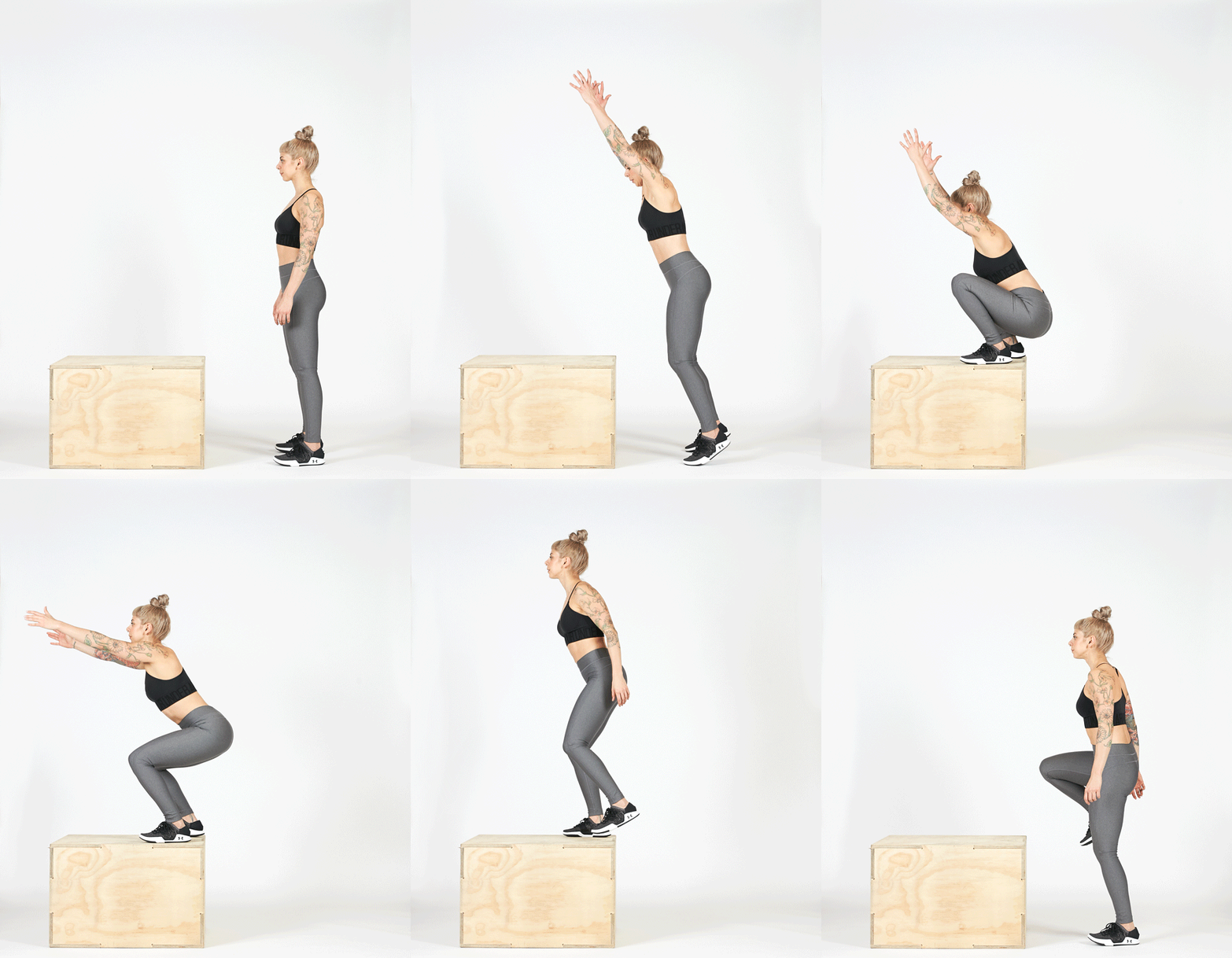
Box Jumps: Your Secret Weapon for Explosive Power
Want to feel like a superhero? Box jumps are your ticket to building incredible leg strength and that coveted explosive power. You only need a sturdy platform – a plyo box or weight bench works perfectly. Aim for something that hits between your shins and knees to start. Trust me, you can work up to those intimidating tall boxes later!
Here’s how to crush it: Plant yourself about a foot away from your box, feet shoulder-width apart. Now comes the fun part – bend those knees slightly, swing your arms back, and explode upward like you’re trying to touch the sky. Land softly on the box with both feet and knees slightly bent to absorb the impact.
Ready for more? Hop back down to the ground (landing like a ninja, not an elephant) and immediately spring back up. That’s one rep! The key is to stay bouncy and light on your feet – think kangaroo, not sumo wrestler.
New to this? No worries! Start with step-ups instead. They’re less intense but still pack a serious punch for building strength. Remember, even pro athletes started somewhere. The most important thing is nailing that form before going all-out on speed or height.
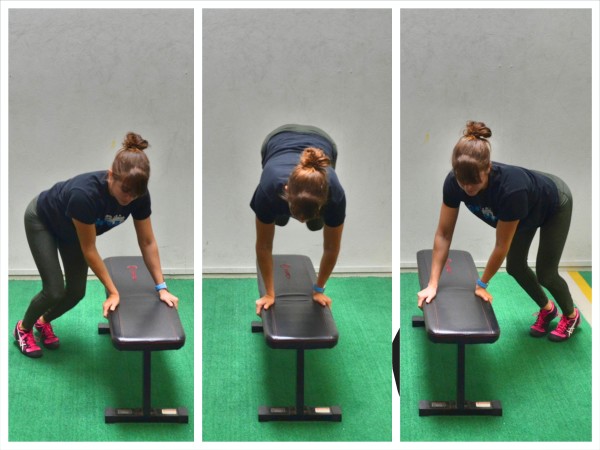
The Bench Hop-Over: Your New Favorite Love-Hate Exercise
Ready to turn a simple weight bench into your cardio best friend? Meet the bench hop-over, a deceptively simple exercise that will make you question your life choices (in the best way possible).
Here’s how to do it:
Start by finding a sturdy weight bench — and yes, “sturdy” is key unless you fancy an unexpected adventure. Plant your hands firmly on one end of the bench, shoulder-width apart. Think of your hands as anchors; they’re not going anywhere.
Now for the fun part. With both feet starting on one side of the bench, channel your inner bunny and hop straight up and over to the other. As soon as your feet touch down, bounce back to where you started. That’s one rep!
The secret sauce? Jump up, not out. Picture yourself hopping over a tall fence rather than trying to clear a long puddle. It keeps the bench from sliding around like a spooked cat, making everything ten times harder.
Keep this up until your timer dings or your legs send you strongly worded-complaints. And don’t worry if you’re not breaking any height records at first—this exercise has a way of keeping even the most seasoned athletes humble.
Pro tip: If you’re new to this, start with 30-second intervals and work up. Your heart will be racing faster than your Netflix subscription costs, but that’s what we’re going for!
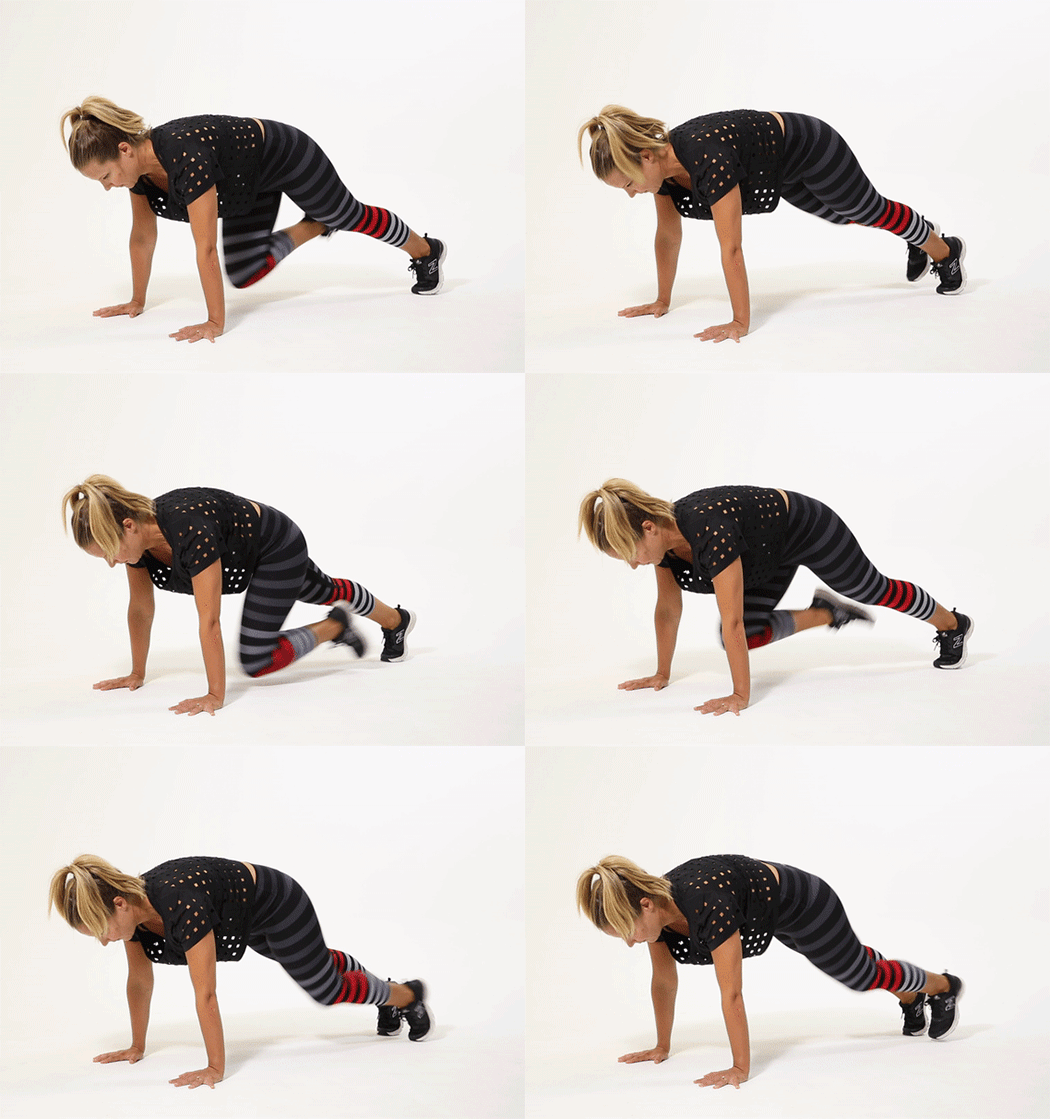
Mountain Climbers: Your New Favorite Exercise
Ever wanted to feel like you’re scaling a mountain without leaving your living room? Meet the mountain climber exercise – it’s like running in place, except you’re planking simultaneously (yeah, we like to multitask around here).
Start by getting into what looks like a pushup position, but push your hips up toward the ceiling. Think of making an upside-down V with your body – or pretend you’re a kid making a “mountain” shape for your toy cars to drive under.
Now for the fun part: bring one knee toward your chest, like a sprinter getting ready to blast off the starting line. Here’s where it gets spicy – you will switch legs in a quick, controlled motion. Think “hot floor” – you want your toes to barely tap the ground before they spring back up.
Pro tip: Don’t let your feet get too comfy down there! A quick tap is all you need – if you’re letting your whole foot settle on the ground, you’re taking a mini-vacation. Keep those legs moving like you’re running from a slow (but persistent) zombie.
Remember: The faster you go, the more your heart will thank you (or curse you, depending on how you look at it). But start slow and build up your speed – there’s no medal for face-planting on day one.
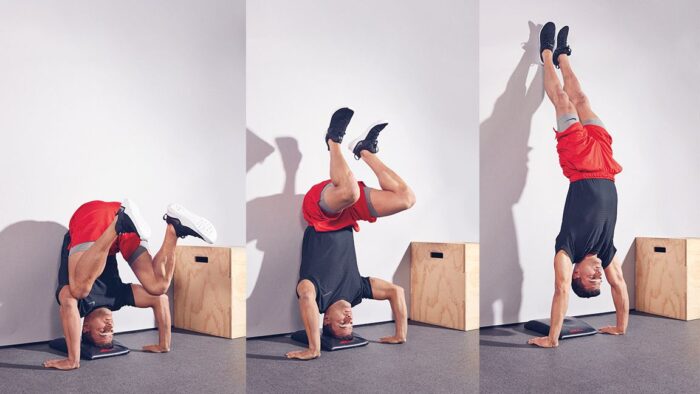
Master the Handstand Pushup: Your Guide to This Epic Move
Want to feel like a fitness superhero? Let’s talk about handstand pushups.
First things first — yes, you’ll be upside down, and yes, it’s as cool as it sounds. Find a sturdy wall (one you don’t mind getting footprints on), and kick those legs into a handstand position. Don’t worry if it takes a few tries; we’ve all been there.
Now for the fun part. Once you’re stable in your handstand, start bending those elbows. Here’s the best part: you don’t need to turn yourself into a human accordion. Lowering your body just a few inches will light up your shoulders, core, and everything else. Trust me, your arms will remind you about it tomorrow.
Quick pro tip: If you’re new to this move, start with shorter holds against the wall before adding the pushup element. Your wrists and shoulders will thank you for the gradual build-up. And remember — looking graceful while doing these is optional. We’re all just trying not to face-plant here.
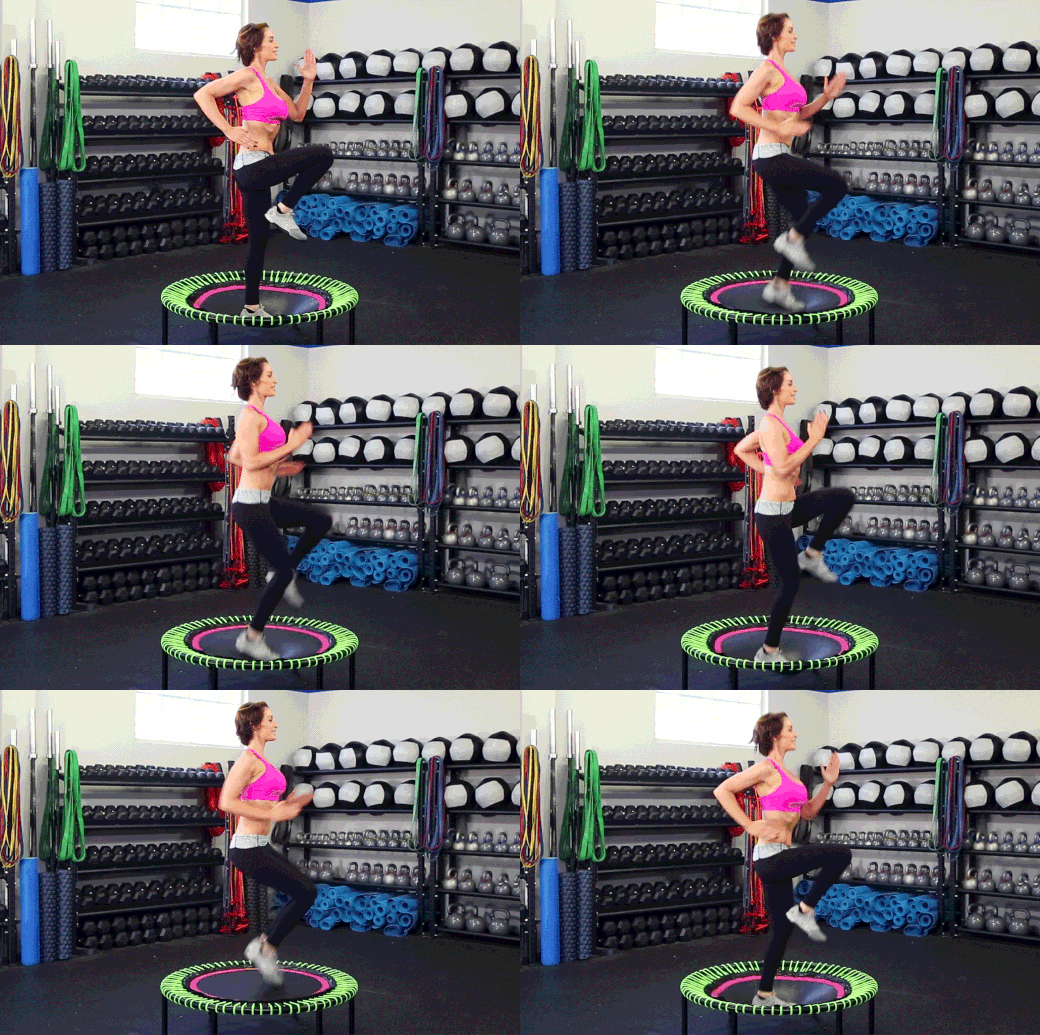
Want a Joint-Friendly Way to Run? Try Trampoline Bouncing!
Have you ever wished you could run without beating up your knees and ankles? Here’s a fun secret: bouncing in place on a mini-trampoline (also called a rebounder) or Bosu ball gives you all the heart-pumping benefits of running, minus the impact on your joints.
Think of it as running on a cloud – you get that satisfying bounce with each step, but the flexible surface absorbs the shock instead of your body. Your heart rate climbs, your muscles engage, and your joints thank you.
Are you new to bouncing? No worries! Start by keeping one hand on a wall, a sturdy chair, or the trampoline’s stability bar. Once you find your rhythm and build confidence, you can let go and bounce freely. Before you know it, you’ll be bouncing like a pro – and maybe even having so much fun you forget you’re exercising.

Why Swimming Might Be Your Perfect Workout
Have you ever noticed how swimmers always seem to have perfectly toned bodies? There’s a good reason for that. Swimming is like a complete gym workout, minus sweating and grunting. Your joints will thank you, too — while runners pound the pavement, you’ll float like a butterfly (hopefully not stinging like a bee).
Here’s what makes swimming so unique: it works pretty much every muscle you’ve got, all while being gentle enough that you can do it practically forever. Your heart gets pumping, your arms get strong, and your legs become powerful — all without a single jarring impact on your joints.
New to the pool? Don’t sweat it. Start with whatever stroke feels natural. The freestyle (the one where you look like you’re crawling through the water) is usually easiest for beginners, but honestly, even doggy paddle counts. The important thing is just getting in there and moving.
Pro tip: If you plan to do interval training (you know, going fast, then slow, then fast again), try to snag a lane to yourself. Trust me, other swimmers tend to get grumpy when someone’s constantly zooming past them and suddenly turning into a human buoy. It’s like trying to drive on a highway where someone keeps switching between NASCAR and Sunday driver modes.
Get Fit Fast: Your Guide to Tabata Training
Want to transform your fitness in just 4 minutes? That’s the magic of Tabata training. This high-intensity workout packs a serious punch: 20 seconds of all-out effort followed by 10 seconds of sweet relief. Rinse and repeat.
What makes Tabata so effective? It’s simple, scalable, and scientifically proven to boost aerobic and anaerobic fitness. Start with a single 4-minute round—that’s eight total intervals—and watch your endurance soar. As you get stronger, add more exercises to your routine.
Pro tip: Take a full 60-second breather between different exercises. Your muscles will thank you, and you’ll be ready to crush the next round. When you’re done, don’t rush off to the shower. Give your body time to recover, and stretch gently to prevent next-day soreness.
Perfect for Busy professionals, fitness beginners, or anyone looking to maximize their workout efficiency. Whether you’re using bodyweight exercises, dumbbells, or cardio moves, Tabata’s formula works for every fitness level.
Important Safety Note:
As with any new exercise program or equipment, it’s essential to consult your physician to ensure the equipment is safe for you to use. It is especially crucial if you have any medical or physical conditions impacting your ability to exercise properly or putting your health at risk. Additionally, if you’re taking medication that affects your heart rate, blood pressure, or cholesterol level, your doctor’s advice is vital to create a workout plan that suits your needs.
Share Your Thoughts and Questions
I hope this in-depth article on the Tabata workout was helpful and informative. I encourage you to share your thoughts and questions on the topic. Have you tried any of the exercises or have experience with similar ones? Your insights can help others make an informed decision. Additionally, I welcome any feedback about my website and suggestions for future content. Your input is invaluable in creating a supportive and informative community.
I look forward to hearing from you and continuing the conversation!
Disclaimer: I am not a personal trainer or a healthcare professional. The workouts I post about work best for me, but they might not be the correct type of exercise for you. I recommend consulting a doctor or health professional before changing your diet and fitness routine.
You May Also Like
How to Keep Fit After Forty: Embrace the New Normal
Hindu squats and the box jump look pretty good. I will try this workout for more ways to work out lower body strength.
Its been a long lock-down, and I didn’t sweat it out. I just hang up a punching bag to work out the upper body as well. Thanks for the tips
Hello there, This is an excellent article that you have got here. Indeed the Tabata workout is a fitness miracle. I just find myself practicing the moves even as I go through them. This moves are genuinely exceptional and beautifully arrayed. They work effectively and affect each curve as you engage them. Thanks for sharing this with me.